Rechercher dans ce blog

Sunday, August 30, 2020

Many older workers entered the pandemic with little saved toward retirement. Here's how they can improve their finances now - CNBC

little.indah.link
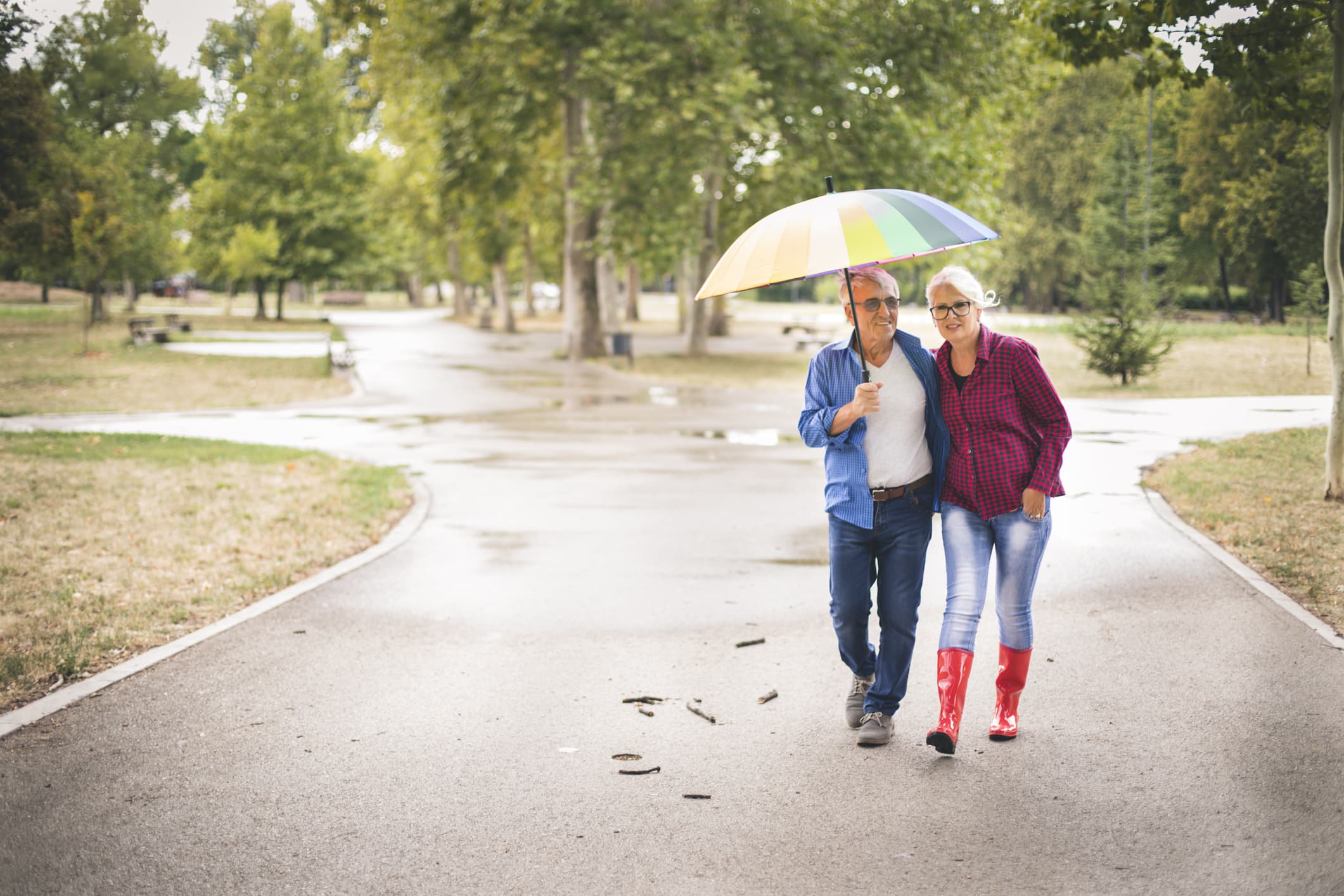
DusanManic | iStock | Getty Images

Many people's retirement dreams received a reality check following the economic downturn caused by the coronavirus pandemic.

New research shows that's especially true for older workers.

A recent report from Democrats on the Joint Economic Committee of Congress found that workers ages 65 and up were hit harder by unemployment than prime age workers ages 25 to 54. In April, older workers' unemployment rate exceeded prime age workers by three percentage points, the biggest gap ever recorded, the research found.

And while that difference narrowed in the following months, the concern is that could be because older workers simply gave up looking for work.

Near retirees — those ages 55 to 64 — are not in a much better position. One-third of those workers have neither a pension nor a 401(k) plan or other employer-provided retirement savings plan.

Workers in that age group who do have access to those retirement accounts have a median of $88,000 saved, according to the report.

Consequently, people who are approaching retirement may want to work longer. But finding employment opportunities may be tough. Age discrimination and high health care costs can make finding a new job difficult, the report pointed out. Meanwhile, those workers face higher health risks if they are exposed to Covid-19.

"If you're in the 55 to 65 range, it's not just six months, a year or a year and a half, it's the rest of your life that is affected by this," said Rep. Don Beyer, D-Va., vice chair of the U.S. Congress Joint Economic Committee.

Those employment trends may lead older workers who can to pursue non-traditional jobs, such as temporary or part-time work, or work in the gig economy.

Research indicates that about a quarter of older workers ages 50 to 64 are working in those kinds of positions at any given time, according to the Center for Retirement Research at Boston College. That data is from before the pandemic, and those numbers could increase following the high unemployment numbers brought on by the downturn.

The Center for Retirement Research recently evaluated what options older workers who pursue non-traditional work have to shore up their retirement savings.

"That latter part of your career is one where ideally you're making the most you're ever going to make" and have the highest ability to save, said Matt Rutledge, research fellow at the Center for Retirement Research.

"If you don't have a place to put that money aside, you're really missing out compared to the people that do," he said.

One way for those workers to invest is in an individual retirement account, or IRA. The maximum that older workers can save in those accounts, though, is much lower than for a 401(k). In 2020, workers ages 50 and up can invest up to $7,000  year in an IRA, compared to $26,000 for a 401(k).

Yet only about 15% of people of all ages contribute to an IRA, according to the Center for Retirement Research. Some states have established auto IRA programs so that workers who do not have access to retirement plans through their employer can automatically save via their pay checks.

Another way some older workers can still save is through their spouse's 401(k), according to the Center for Retirement Research.

Those couples would need to save more to cover retirement costs for two people. That often does not happen, the report found.

One reason for that is many older workers still may prioritize immediate expenses over their long-term savings goals, Rutledge said.

"A lot of older workers say, 'What difference would a little bit of savings do for me now? It's not going to have time to really grow," Rutledge said.

Admittedly, younger workers stand to benefit the most from putting money toward retirement, because the cash will have more time to compound.

More from Your Money, Your Future:
Trump's payroll tax would 'terminate' Social Security, critics say
Self-employed people may miss out on payroll tax break
Why college students might get less financial aid next year

But there are a couple of things that older workers can still do to help preserve their lifestyles later on.

"The best thing for saving is getting used to living on less," Rutledge said. "You are lowering the bar that you need to clear to be able to afford to live."

Another way to make your money last longer is to keep working if you can.

"As long as you're healthy enough to do so, the best thing you can possibly do for your finances is just to keep working," Rutledge said.

Research has shown that, in some circumstances, working just one year longer can make a bigger difference than saving 1% more over the course of a career, he said.

Let's block ads! (Why?)

The Link Lonk


August 30, 2020 at 08:30PM
https://www.cnbc.com/2020/08/30/older-workers-have-little-saved-toward-retirement-heres-how-to-fix-that.html

Many older workers entered the pandemic with little saved toward retirement. Here's how they can improve their finances now - CNBC

https://news.google.com/search?q=little&hl=en-US&gl=US&ceid=US:en

‘A little underdog’: A rediscovered log cabin with a mysterious past in Hagerstown showcases a forgotten Black - Baltimore Sun

little.indah.link

Unfortunately, our website is currently unavailable in most European countries. We are engaged on the issue and committed to looking at options that support our full range of digital offerings to the EU market. We continue to identify technical compliance solutions that will provide all readers with our award-winning journalism.

Let's block ads! (Why?)

The Link Lonk


August 30, 2020 at 04:03PM
https://www.baltimoresun.com/maryland/bs-md-hagerstown-jonathan-street-20200830-l3b4nvemjnapfkg5zm53zodrtu-story.html

‘A little underdog’: A rediscovered log cabin with a mysterious past in Hagerstown showcases a forgotten Black - Baltimore Sun

https://news.google.com/search?q=little&hl=en-US&gl=US&ceid=US:en

Saturday, August 29, 2020

Little League International Congress to Be Held in Williamsport in 2022 - Williamsport Sun-Gazette

little.indah.link

[unable to retrieve full-text content]

Little League International Congress to Be Held in Williamsport in 2022  Williamsport Sun-Gazette The Link Lonk


August 30, 2020 at 01:30PM
https://www.sungazette.com/news/top-news/2020/08/little-league-international-congress-to-be-held-in-williamsport-in-2022/

Little League International Congress to Be Held in Williamsport in 2022 - Williamsport Sun-Gazette

https://news.google.com/search?q=little&hl=en-US&gl=US&ceid=US:en

Ann Farabee column — A little sweeter - Salisbury Post - Salisbury Post

little.indah.link

By Ann Farabee

I sat down beside my four-year-old granddaughter to watch her enjoy some chunks of watermelon I had put in a bowl for her. As soon as she took the first bite, juice began rolling down her chin onto her neck, her shirt, her shorts, the chair and the floor. I grabbed a napkin, as she looked toward me and said excitedly, “It tastes sweeter than it did last time.”

It seemed more like juiciness to me, but the sweetness was definitely flowing everywhere as I began to wipe her chin.

The watermelon, according to the book of Hope, was a little sweeter than it had been the last time.

I totally understood.
For it reminded me of my life.
Of many of our lives — especially over the last few months.

The simple things we may have never even noticed before, somehow now seem to have become a little sweeter.

Things like:

Walking in the doors of our church to worship — a little sweeter.
Walking in a grocery store — a little sweeter.
The new school year beginning — a little sweeter.
Going to work — a little sweeter.
Getting together with a friend — a little sweeter.
Spending time with our family — a little sweeter.
Walking in our neighborhood — a little sweeter.
Watching a child eat watermelon and not worrying about the juice — a little sweeter.

Yes. It is flowing everywhere — the sweetness of our lives.

She then reached into the bowl, handed me a chunk, and said, “You wanna taste it and see?”

When I heard her words, I answered with these words, “I sure do.” I tasted it. I saw. I was a bit too proper to let the juice run down my chin, but tears were running down my cheeks, as I said, “Yes, Lord. I have tasted and I have seen that You are good. And… it sure does get sweeter every day.”

Psalm 104:34 says, “My meditation of Him shall be sweet.”

Psalm 34:8 says, “O taste and see that the Lord is good. Blessed is the man who trusts in him.”

Ann Farabee is a teacher, writer and speaker. Contact her at  annfarabee@gmail.com or annfarabee.com.

About Post Lifestyles

Visit us on Facebook: https://www.facebook.com/SalPostLifestyle/ and Twitter @postlifestlyes for more content

email author More by Post

Let's block ads! (Why?)

The Link Lonk


August 30, 2020 at 11:02AM
https://www.salisburypost.com/2020/08/30/ann-farabee-column-a-little-sweeter/

Ann Farabee column — A little sweeter - Salisbury Post - Salisbury Post

https://news.google.com/search?q=little&hl=en-US&gl=US&ceid=US:en

Little libraries can have a big impact amid a very big pandemic - LA Daily News

little.indah.link

We old timers are a stubborn lot. Many of us still have our landlines, and we hung on to our typewriters and LP’s until the bitter end, hoping for a comeback. We still write letters, enjoy our local newspaper with our morning coffee, and our books are hardcover and in our hands, not on a screen.

We know technology is making life faster and easier, but the jury’s still out on better. We’re not going to let our old habits die without a fight.

When the coronavirus took away our libraries this year, we built our own. We used old doll houses and bought mini library kits to build one. We put them in front of our homes, welcoming neighbors to take a book, and please replenish the stock with one of their own.

Jan McVarish and Midge Gisel, stock of the three Granada Hills mini libraries in their neighborhood on Thursday, August 27, 2020. (Photo by Dean Musgrove, Los Angeles daily News/SCNG)

It’s called sharing, another old habit old timers can’t seem to kick. These little free libraries are not a new idea. They began in 2009 in Wisconsin with a man named Todd Bol, who has since passed away. He took an old, wooden container and made it into a one-room schoolhouse, putting it on his front lawn as a tribute to his late mother, a school teacher.

The closing of our public libraries seems to have reinvigorated the idea. In Jan McVarish and Midge Gisel’s neighborhood in Granada Hills, there are four mini libraries they pass on their morning walks under the historic Deodar pine trees along White Oak Avenue.

When they moved into their homes nearly 50 years ago that section of White Oak was still a dirt road, so it’s safe to say they both qualify as old timers. Midge was an early child actor in the old “Our Gang” comedies.

“Remember the scenes where Spanky or someone would say to the gang ‘let’s put on a show?’ I was one of the child dancers in the show.”

Both women are easy to recognize on the street. Not many people are carrying an armful of books on their morning walks to replenish their neighborhood mini libraries.

“I never go anywhere without a book,” Jan says. “I just like holding them in my hands. With the public libraries being closed, these little, free libraries have been a treasure, especially for children’s books that young families in the neighborhood are sharing with each other.

“We had one person who must have been a retired school teacher put all her lesson plans in one of the mini libraries, and they were all gone within a week. With the schools shut down, they’re probably being used for home schooling. Without these little libraries they probably would have been thrown out.”

Midge sees them as a reprieve from death for many books that have outlived their shelf life in libraries. They can be donated to organizations like Goodwill to be resold, but there’s still a price to pay. Even $4 for a couple of books is $4 for food or the gas bill for families who have lost their income.

She gets many history books donated to the San Fernando Valley Historical Society, where she is a longstanding member. When they start stacking up, she takes 20 or so, and puts them into the free, little libraries.

“I just wish we had more of them,” Midge says. “I hate to see books destroyed because there isn’t room for them anymore.”

That’s another old habit we old timer’s just can’t kick. Waste. We hate to throw things out if they still work.

Books work. They always have and they always will.

Dennis McCarthy’s column runs on Sunday. He can be reached at dmccarthynews@gmail.com.

Let's block ads! (Why?)

The Link Lonk


August 30, 2020 at 10:05AM
https://www.dailynews.com/2020/08/29/little-libraries-can-have-a-big-impact-amid-a-very-big-pandemic/

Little libraries can have a big impact amid a very big pandemic - LA Daily News

https://news.google.com/search?q=little&hl=en-US&gl=US&ceid=US:en

Why Little Things, Like His Players Picking Up Their Trash, Show Ron Rivera He's Building Something - NBC4 Washington

little.indah.link

Ron Rivera isn't even through his first training camp with the Washington Football Team, so his rebuild of the franchise - which he's projected as a multi-year process - has barely gotten started.

Even so, he's already seeing signs of progress - signs that outsiders wouldn't even notice.

"It's the little things," Rivera told the media on Friday. "It's as basic as just as when you're walking through the locker room and you see guys picking up stuff and throwing it in the garbage. You see the way guys are handling themselves, pushing each other, taking responsibility."

"One of the things that Coach [Mike] Ditka told me, he always felt good about us when he saw us take ownership," he said. "That's part of the culture, you have to take ownership and be responsible. Those are the things that you look for. I think those are the important things."

When compared to Rivera's overall goal of leading Washington to sustained winning, players tossing some trash away feels infinitesimal. To him, however, it's not. He cares about even the most minute details, which is a quality that many of the organization's recent, key figures lacked. 

Beyond the desire to have a group that takes care of even the simplest tasks, the two-time Coach of the Year also wants to develop one that's more together. That won't be easy, especially in an organization that's grown so accustomed to losing, and losing, and losing, yet he's pleased with the early steps in that area, too.

"When you're struggling and you're coming off some tough times, the tendency is to be really about yourself because: ‘If we're not doing well, I'm going to get mine,'" Rivera said. "Honestly, I kind of felt that early on that there was a little selfishness."

"But as we've gone through this, you've started to see the guys opening up with one another," he continued. "You see the older guys putting their arms around the young guys and talking to them and saying, ‘Hey, you know what, this is how you need to do it. Take a look at this.' That to me is encouraging."

CLICK HERE TO SUBSCRIBE TO THE WASHINGTON FOOTBALL TALK PODCAST

Moments like Morgan Moses pausing his participation in 1-on-1s to discuss a past rep with Chase Young or Kendall Fuller and Landon Collins meshing in the secondary prove to Rivera he's onto something.

And on a larger scale, his version of camp has been much more physical and much more high-tempo than past editions, as the 58-year-old works to instill his values in a roster that he's only just beginning to mold. Change is occurring.

Of course, there is plenty of reason to be skeptical that this next, new chapter in the Burgundy and Gold's history will be the turnaround. Seriously, pick whichever one you want: All of the chaos going on above Rivera's head, all of the past hires who failed despite having a plan like Rivera does, a talent pool that is currently near the bottom of the sport, and so on.

Rivera's a smart and successful person, and he's absolutely aware of all of those above challenges. He's not necessarily trying to take them head on right now, however.

Instead, his goal is to address things on a smaller scale, and in doing so, eventually chip away at those bigger obstacles.

"One of the things that I always tell the guys: ‘If what we did last year you think is good enough, it's not. You're wrong,'" Rivera said. "It's not good enough because it was only good enough for 3-13. So, we've got to get past that and get to where we want to go."

MORE WASHINGTON FOOTBALL NEWS

Why little things, like his players picking up their trash, show Ron Rivera he's building something originally appeared on NBC Sports Washington

Let's block ads! (Why?)

The Link Lonk


August 30, 2020 at 01:26AM
https://www.nbcwashington.com/news/sports/nbcsports/why-little-things-like-his-players-picking-up-their-trash-show-ron-rivera-hes-building-something/2404995/

Why Little Things, Like His Players Picking Up Their Trash, Show Ron Rivera He's Building Something - NBC4 Washington

https://news.google.com/search?q=little&hl=en-US&gl=US&ceid=US:en

DraftKings CEO sounds alarm on SPAC market: 'Hopefully the market settles down a little bit there' - CNBC

little.indah.link
The entrance from the elevators, designed to resemble a tunnel entering a stadium, is pictured at the new DraftKings office in Boston on March 25, 2019.
David L. Ryan | The Boston Globe via Getty Images

The SPAC market may be getting frothy. 

Just like in entertainment, when network executives copycat a hit show format until the market is saturated, investors are flooding the market with special purpose acquisition companies, or SPACs, to scout private companies to take them public. 

The boom started earlier this year, when companies such as electric vehicle company Nikola and DraftKings saw their valuations soar once they became public through SPACs. The reaction was eye-opening for investment professionals, who suddenly viewed SPACs as a viable option for growth companies.

"Historically, growth companies wouldn't have been thought of as SPAC candidates," said Bennett Schachter, Morgan Stanley's global head of alternative capital solutions. "What Draftkings and Nikola did, I think they showed the market that there's a new application of SPACs."

Still, while DraftKings' decision to reverse-merge into a SPAC led to the company's valuation ballooning from about $3 billion in April to more than $13 billion Friday, investors and companies should be wary about the surge of available SPACs. Not all of them will be good fits, said DraftKings CEO Jason Robins in a CNBC interview.

"Hopefully the market settles down a little bit there," Robins told CNBC's A View from the Top. "I think there are a lot of SPACs now. Some will do well and some won't. For the right companies, SPACs are great vehicles, but it's not a fit for everybody. It's not a fit for every company."

SPACs: Not a fit for everyone

A SPAC typically scouts and acquires its target within two years. Companies that use SPACs skip the initial public offering process, including company roadshows. SPACs are up 145% from a year ago, according to a recent note from Goldman Sachs

There are several different factors to consider for companies deciding if they want to merge into SPACs, said Schachter. The most important is finding the right fit between the investor base that has put money into the blank-check company and the company, itself. SPAC owners should have a track record taking companies from the private market to the public market, either financially or operationally, Schachter said. The number of individuals putting money into SPACs without this expertise is a sign the market is getting overheated, Schachter said.

"Just because you've made money doesn't mean you're going to be a successful SPAC issuer," Schachter said. "LeBron James or Michael Jordan might be the best basketball player, but if you gave them ice skates, I'm not sure they'd be Wayne Gretzky. Just because you've been successful doing one thing doesn't mean you will be successful doing something else."

While most SPACs are targeted, the focus of the investment vehicle is less important than the actual track records of the individuals operating the shell company who will continue to invest in the company moving forward. In recent weeks, hedge fund manager Bill Ackman, Oakland Athletics general manger Billy Beane, former Trump administration economic adviser Gary Cohn and former speaker of the United States House of Representatives Paul Ryan are among the notable names to back SPACs. 

"If you move LeBron James from one basketball team to another -- from the Cleveland Cavaliers to the Los Angeles Lakers -- there's a good chance he'll still do well," Schachter said. "You need to leverage the skill set that the particular SPAC has."

The burgeoning number of SPACs is leading to "lower quality" shell companies that don't offer the same knowledge or track record of success with public companies, said Schachter. Still, the beauty of SPACs is that investors do have some protection. That's because investors in a SPAC can typically walk away with all of their money if they don't like the company targeted to be acquired. 

That protection will likely lead to a continued surge in SPACs -- as long as the market continues to reward them.

Let's block ads! (Why?)

The Link Lonk


August 29, 2020 at 08:45PM
https://www.cnbc.com/2020/08/29/draftkings-ceo-cautious-on-spacs-hopes-market-settles-down.html

DraftKings CEO sounds alarm on SPAC market: 'Hopefully the market settles down a little bit there' - CNBC

https://news.google.com/search?q=little&hl=en-US&gl=US&ceid=US:en
Featured Post

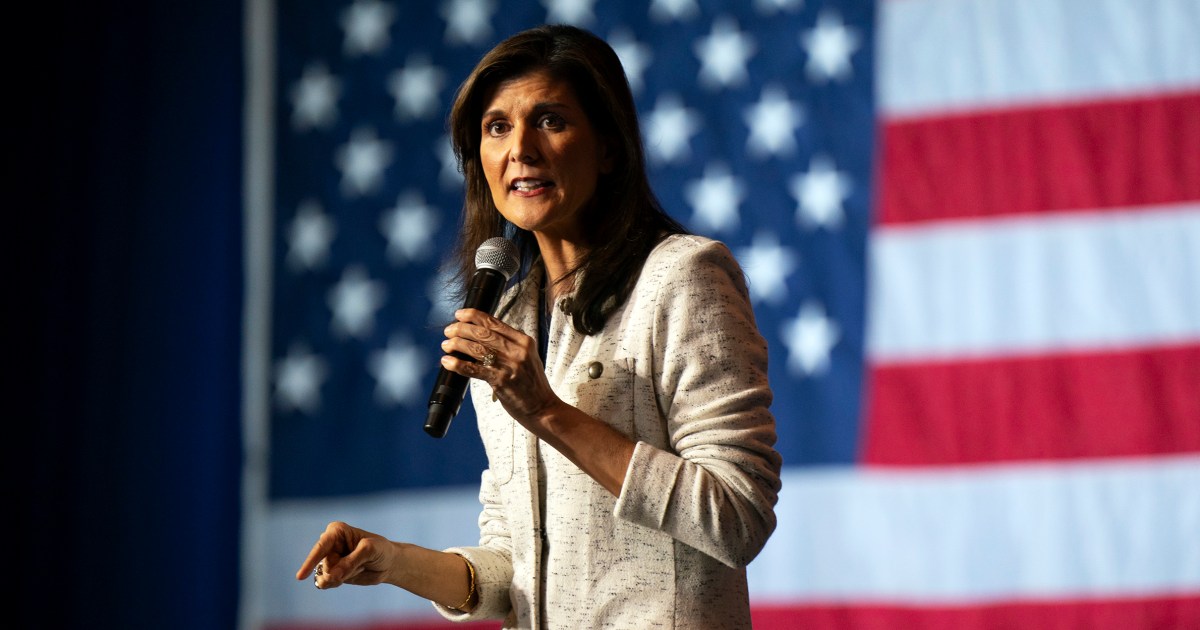
Nikki Haley's super PAC spent big to fuel her rise. It started 2024 with little left. - NBC News

little.indah.link The super PAC backing former U.N. Ambassador Nikki Haley entered the election year in January with just $3.5 million in...

Popular Posts