Rechercher dans ce blog

Wednesday, December 30, 2020

Champion Plumbing donation helps secure playground for Little Light Christian School - PRNewswire

little.indah.link

As one of Little Light's "Business Dream Builders," the school created a GoFundMe page with a goal of $5,000. Champion Plumbing's matching donation helped Little Light complete phase 1 of their mission, which allowed the school to install equipment for grades K-2.

"We love our community, and Little Light Christian School has a positive influence on our city," said Leslie Harpole. "Champion Plumbing wants to be more than just a for-profit business. We want to also focus our efforts on giving back to the community, and what better way to give back than helping fund a playground for these students."

Little Light Christian School is dedicated to helping children whose parents are incarcerated or have a history of incarceration. Offering a tuition-free private school experience, the school is funded through private and business donations, as well as grants through various foundations. The school provides food, transportation, school supplies and clothes for the children.

"We are thankful for this partnership with Champion Plumbing," said Robin Khoury, founder and principal of Little Light Christian School. "After exceeding our expectations in phase 1, we can now began focusing on installing equipment for grades 3-5. This playground will offer our students an opportunity to get out of the classroom and have fun outdoors.

"At Little Light, we work hard to offer these children a safe learning environment and set them on a pathway to success."

To make a donation, please visit the GoFundMe page at https://bit.ly/37k8dce.

For more information about Champion Plumbing, visit https://callthechamps.com/.

For more information about Little Light Christian School, please visit https://littlelightschool.org/.

About Champion Plumbing

Started in 2015, Champion Plumbing is led by the husband-and-wife duo of Leslie and Brent Harpole. Champion provides plumbing and water quality services to the residents of Oklahoma City, Oklahoma and surrounding areas. The team specializes in water heater services, drain cleaning, garbage disposals, water filtration systems and backflow repair. The company is dedicated to giving back to the local community in addition to helping them with their plumbing needs.

About Little Light Christian School

Little Light Christian School is a private school located in Oklahoma City. Funded by donations and grants, the school offers a tuition-free private school experience to children who have incarcerated parents or whose parents have a history of incarceration. The school is a safe space for children to better their academics while also receiving food, transportation and school supplies. Throughout a year, Little Light will feed thousands of hot meals to their students while also providing necessary supplies and instructional time.

MEDIA CONTACT:
Heather Ripley
Ripley PR
(865) 977-1973
[email protected]

SOURCE Champion Plumbing

Related Links

https://callthechamps.com

Let's block ads! (Why?)

The Link Lonk


December 30, 2020 at 07:03PM
https://www.prnewswire.com/news-releases/champion-plumbing-donation-helps-secure-playground-for-little-light-christian-school-301199122.html

Champion Plumbing donation helps secure playground for Little Light Christian School - PRNewswire

https://news.google.com/search?q=little&hl=en-US&gl=US&ceid=US:en

Tuesday, December 29, 2020

New federal stimulus aid for small businesses means little for two local entrepreneurs - Chicago Sun-Times

little.indah.link

The day Chris Costoso had feared so much finally came last month.

He was forced to shut down his photography business and turn over the keys to his storefront studio.

After nearly five years in business, that studio had become a part of him, he said.

In some cases, Costoso’s photos chronicle some couples’ lives together — from engagement, to wedding, and eventually, to family portraits.

“Handing over the last key to the [building] owner was just horrible,” Costoso said. “I didn’t think it would hurt so much but as a small entrepreneur, I have put everything into my business and watched it flourish until something out of my control ended it so quickly.”

Impact Images Studio, 3602 N. Lavergne Ave., shown on Wednesday afternoon.
An empty Impact Images Studio, 3602 N. Lavergne Ave., photographed in April.
Ashlee Rezin Garcia/Sun-Times file photo

On Sunday, President Donald Trump signed a $900 billion pandemic relief package lauded to help people, but Costoso said for him, it’s “too little, too late.”

“This latest stimulus doesn’t even matter to me at this point. It’s whatever. I mean, I’m already shut down,” Costoso said. “I can only rely on myself to make something happen and to bring some sort of income in.”

The latest COVID-19 relief package would put $284 billion back into the Paycheck Protection Program, which offers forgivable loans to small businesses to keep their employees on payroll during the pandemic. Portions of that will be dedicated to minority-owned businesses and companies in low-income areas.

An additional $20 billion would also go toward small business grants.

The $2.2 trillion CARES Act, passed in March, created the PPP program; that first round of aid eventually reached $669 billion.

Costoso applied then but never received any aid. At this point he feels both the federal and local government have let him down.

Chris Costoso had to shut down his businesses at Impact Images Studio, 3602 N. Lavergne Ave.
Ashlee Rezin Garcia/Sun-Times file photo

Businesses like Costoso’s that didn’t have strong relationships with the banks handling the PPP loans were left adrift, he believes. In Illinois, 12% of businesses and nonprofits getting loans from the PPP program accounted for 74% of the money — meaning bigger employers benefited the most.

Costoso said he did everything to keep his business afloat. He dropped the price his photo shoots from $650 to just $100 to generate some sort of income to pay his rent on his home and his storefront, but he still fell too far behind.

And with social media hyper-politicized during the presidential campaign, it was difficult to use those platforms to market his business online.

“People are not looking for a new photographer and they are focused on the news with coronavirus, civil unrest, the elections and then those challenging the election results,” Costoso said. “So much of our advertising and marketing on Facebook was just getting ignored or washed away.”

Quentin Love, owner of Turkey Chop at 3506 W. Chicago Ave., also received no PPP assistance, or any other federal help targeting small businesses.

And even though revenue at his West Humboldt Park business has dropped by 75% in the last nine months compared to last year, Love has no intention of applying for the new round of PPP loans.

“It’s fine, because I don’t live my life waiting for someone to help me,” Love said. “I’m not counting on it. I’m just moving forward, looking at innovative ways to keep my business alive.”

That doesn’t mean Love isn’t committed to helping others in West Humboldt Park during the pandemic.

Turkey Chop owner Quentin Love at his restaurant, 3506 W. Chicago Ave. in Humboldt Park, Tuesday, Dec. 29, 2020.
Revenue at his restaurant, Turkey Chop, is way down this year, but owner Quentin Love continues to donate 25% of revenue to those in need.
Anthony Vazquez/Sun-Times

Love said he knows some businesses have had to shutter during this time but hesitates to blame the government.

“We are all trying to figure this thing out and we all are suffering. ... There isn’t a single person out there that hasn’t lost something,” Love said. “The government has been impacted, we have lost loved ones and people we care about. But really, what else can we do? This is bigger than how much money is available. I don’t live my life around that.”

One thing these last nine months has taught Love was how to be innovative. He said he has collaborated with urban farms to help cut costs. And when he couldn’t afford staff, he brought in volunteers so he could give them hands-on experience in the culinary field and teach them how his business works.

“I learned to evolve and really learned to be quicker on my feet,” Love said. “We are still in business, we are still alive and we want to see everyone on the other side of this thing. Because even in loss, we are winning — as long as we are alive.”

Let's block ads! (Why?)

The Link Lonk


December 30, 2020 at 07:07AM
https://chicago.suntimes.com/business/2020/12/29/22205132/illinois-coronavirus-small-business-assistance-federal-stimulus-aid-congress-humboldt-park

New federal stimulus aid for small businesses means little for two local entrepreneurs - Chicago Sun-Times

https://news.google.com/search?q=little&hl=en-US&gl=US&ceid=US:en

Little Falls bus driver who delivered meals now awaits students' return - Minnesota Public Radio News

little.indah.link

For students in Little Falls, Minn., who were abruptly sent home, isolated from friends and teachers this spring, Melanie Van Alst's familiar face was a welcome relief.

Melanie Van Alst is a school bus driver in Little Falls, Minn.

Melanie Van Alst

Courtesy of Melanie Van Alst

She knows every student along her rural school bus route, which stretches down long gravel roads and across wind-blown farm fields in central Minnesota.

Back in March, when COVID-19 forced schools to shut down, Van Alst delivered meals — and sometimes homework — to homebound students who attend Little Falls Community Schools. She greeted each student with a honk, a smile and a friendly wave.

It's been a tumultuous year since then.

Little Falls students started learning in the classroom when they returned to school from summer break, and Van Alst was back to shuttling them to and from school. But in November, when COVID-19 cases spiked in the region, the district switched to distance learning, and bus drivers were no longer needed.

Van Alst said the instability has been difficult.

“I'm sure a lot of parents were just like, ‘What the heck am I gonna do now?’” she said. “And students were scared and worried and [wondering], ‘When am I going to get to see my friends?’ And, ‘I'm used to having my teacher each day.’ And that structure was all gone."

The Little Falls school district still offers meals for students. But now, families pick them up at designated locations.

A person holds a note written by a child.

A young student made a card for school bus driver Melanie Van Alst to show her appreciation for the home-delivered meals in March.

Paul Middlestaedt for MPR News file

"I miss the kids so much.” she said. “I still text some of them, and I've gotten messages and calls from some mom saying, ‘Hey, when can we meet to do a little gift exchange?’ Or little kids want to call come by and see me …  because they miss me, too. And it's so heart-wrenching."

Van Alst has been driving for Palmer Bus Service for six years. She said the company is continuing to pay its employees during the shutdown. In the meantime, she's working at her second job in Brainerd, Minn., and she recovered from a bout with COVID-19 earlier in the fall.

Little Falls preschool and elementary students are scheduled to school for in-person learning on Jan. 11.

Van Alst said she plans to be behind the wheel.

A person walking down a dirt road with a school bus in the background.

Suzie Rudolph walks out to hand deliver a meal to a waiting Little Falls student in March. Rudolph and a small group drove in the bus along its normal route and delivered 44 meals as schools close amid the COVID-19 pandemic.

Paul Middlestaedt for MPR News file


Looking back, looking ahead: As 2020 comes to a close, several MPR News reporters have been checking back in with people they met earlier in the pandemic — about how their lives have changed, and about what they're hopeful for in the new year.


Data in these graphs are based on the Minnesota Department of Health's cumulative totals released at 11 a.m. daily. You can find more detailed statistics on COVID-19 at the Health Department website.

The coronavirus is transmitted through respiratory droplets, coughs and sneezes, similar to the way the flu can spread.

You make MPR News possible. Individual donations are behind the clarity in coverage from our reporters across the state, stories that connect us, and conversations that provide perspectives. Help ensure MPR remains a resource that brings Minnesotans together.

Let's block ads! (Why?)

The Link Lonk


December 29, 2020 at 05:00PM
https://www.mprnews.org/story/2020/12/29/little-falls-bus-driver-who-delivered-meals-now-awaits-students-return

Little Falls bus driver who delivered meals now awaits students' return - Minnesota Public Radio News

https://news.google.com/search?q=little&hl=en-US&gl=US&ceid=US:en

TREASURIES-U.S. yields little changed to higher; focus on stimulus checks - Reuters

little.indah.link
    * Markets bet bill on $2,000 aid check will not pass in
Senate
    * U.S. yield curve modestly steeper
    * U.S. 7-year note auction shows lackluster results
    * German, Italian 10-year yields flat on day in thin trade

 (Adds comment, Italian and German yields, updates prices)
    By Gertrude Chavez-Dreyfuss
    NEW YORK, Dec 29 (Reuters) - U.S. Treasury yields were flat
to modestly higher on Tuesday in thin trading as U.S. stocks
surrendered gains, with investors betting a heftier federal
stimulus check was unlikely to get the nod in the Republican-led
U.S. Senate.
    Legislation on a $2,000 stimulus check is in the Senate's
hands on Tuesday after President Donald Trump signed a $2.3
trillion pandemic aid and spending package on Sunday.
    Risk appetite ebbed during the latest hour, with yields
turning lower for some maturities, as investors digested
comments from congressional leaders on the hotly debated
stimulus.
    U.S. Senate Majority Leader Mitch McConnell on Tuesday
blocked immediate consideration of a measure to increase
COVID-19 relief payments to $2,000, but he suggested the Senate
would at least examine the issue.
    "The wall among Senate Republicans to stick to $600 impact
payments is cracking, but the majority leader could have the
cement to hold it together," said Jim Vogel, senior rates
strategist at FHN Financial in Memphis, Tennessee, in his latest
research note.
    "Time is running out, maybe," he added. 
    As this developed, the Treasury's U.S. 7-year note auction,
the last coupon supply for 2020, showed tepid results, weighed
down by the increase in auction size, and in line with the
underwhelming outcomes for the 2-year and 5-year offerings on
Monday.
    The high yield was at 0.662%, slightly higher than the
"when-issued" or expected level of around 0.660% at the bid
deadline, which meant investors demanded a little more yield to
own the paper.
    There were $136.6 billion in bids for a 2.31 bid-to-cover
ratio, a gauge of demand. That ratio was lower than last month's
2.37 and the 2.47 average, according to analysts. Indirect
bidders, which include foreign central banks, took 60.3% of
supply, lower than November's 65.4% uptake, and the 63.1%
average.
    The U.S. yield curve was slightly steeper on the day, with
the overall steepening trend still intact amid increased risk
appetite trending the last few sessions, as well as expectations
of higher inflation. The yield spread between 2-year and 10-year
notes was last at 80.60 basis points.
    Last week, that curve hit its widest in more than three
years. Since late July, the gap between U.S. 2-year and 10-year
yields has widened by roughly 50 basis points.
    In afternoon trading, the U.S. benchmark 10-year yield
 was flat at 0.934%, from 0.933% late on Monday.
    Post-auction, U.S. 7-year note yields were last down at
0.645%, from 0.648% on Monday.
    U.S. 30-year yields rose to 1.673% from Monday's
1.669%.
    On the front end of the curve, U.S. 2-year yields inched
lower to 0.128% from 0.133% on Monday.
    Breakeven rates on 10-year TIPS, which measure
expected annual inflation for the next 10 years, slipped to
1.963%, from Monday's 1.967%. 
    In the European bond market, benchmark German 10-year
government bond yields were flat at -0.573% in light
trading, while benchmark Italian 10-year bond yields slipped to
0.521%, from 0.522% on Monday.
    Volume is likely to remain thin in Europe this week, with
German stock markets already closed on Thursday and all markets
shut on Friday for New Year's day.
  
      December 29 Tuesday 3:18PM New York / 2018 GMT
                               Price        Current   Net
                                            Yield %   Change
                                                      (bps)
 Three-month bills             0.095        0.0963    -0.005
 Six-month bills               0.1          0.1014    -0.003
 Two-year note                 99-254/256   0.1289    -0.004
 Three-year note               99-222/256   0.17      -0.003
 Five-year note                99-252/256   0.3782    -0.002
 Seven-year note               99-220/256   0.6458    -0.002
 10-year note                  99-112/256   0.9347    0.002
 20-year bond                  98-108/256   1.4668    0.006
 30-year bond                  98-228/256   1.6723    0.003
                                                      
   DOLLAR SWAP SPREADS                                
                               Last (bps)   Net       
                                            Change    
                                            (bps)     
 U.S. 2-year dollar swap         7.75        -0.25    
 spread                                               
 U.S. 3-year dollar swap         7.75         0.00    
 spread                                               
 U.S. 5-year dollar swap         6.75        -1.25    
 spread                                               
 U.S. 10-year dollar swap        1.00         0.00    
 spread                                               
 U.S. 30-year dollar swap      -24.75         0.50    
 spread (Editing by Richard Chang)

Let's block ads! (Why?)

The Link Lonk


December 30, 2020 at 03:27AM
https://www.reuters.com/article/usa-bonds/treasuries-u-s-yields-little-changed-to-higher-focus-on-stimulus-checks-idUSL1N2J919Y

TREASURIES-U.S. yields little changed to higher; focus on stimulus checks - Reuters

https://news.google.com/search?q=little&hl=en-US&gl=US&ceid=US:en

In Miami's Diverse Communities, Coronavirus Communication Takes Time : Shots - Health News - NPR

little.indah.link

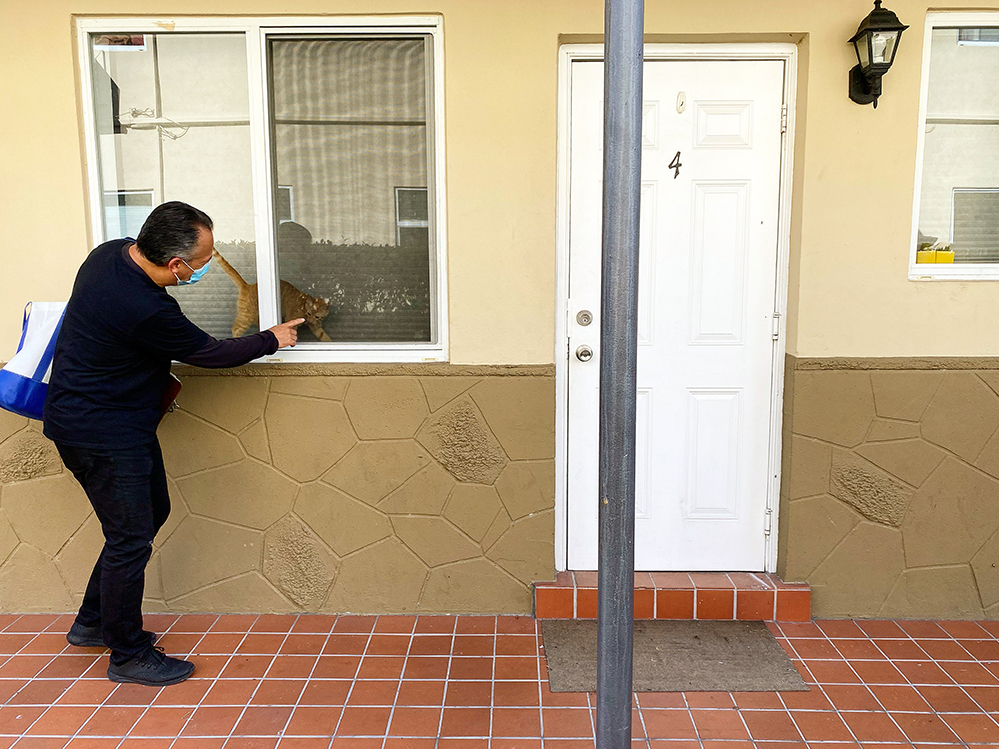
Alejandro Díaz greets a cat on Oct. 23 at an apartment complex in the Little Havana neighborhood of Miami. He's an outreach worker with Healthy Little Havana, going door to door to talk to people about getting tested for COVID-19. Verónica Zaragovia/WLRN

Verónica Zaragovia/WLRN

Little Havana is a neighborhood in Miami that, until the pandemic, was known for its active street life along Calle Ocho, including live music venues. There you can find examples of the quintessential ventanita serving Cuban coffee and a historic park where men gather to play dominoes.

But during the pandemic, a local group called Healthy Little Havana is zeroing in on this area with a very specific assignment: convincing residents to get a coronavirus test.

The nonprofit has lots of outreach experience. It helped with the local count for the 2020 Census, for example, and because of the pandemic did most of that work by phone. But this new challenge, community leaders say, needs a face-to-face approach.

The group's outreach workers have been heading out almost daily to walk the quiet residential streets, to convince as many people as possible to get tested for the coronavirus. On a recent afternoon, a group of three — Elvis Mendes, María Elena González and Alejandro Díaz — knocked on door after door at a two-story apartment building. Many people here have jobs in the service industry, retail or construction; most of them aren't home when visitors come calling.

Lisette Mejía did answer her door, holding a baby in her arms, and flanked by two small children.

"Not everyone has easy access to the internet or the ability to look for appointments," Mejía replied, after being asked why she hadn't gotten a test. She added that she hasn't had any symptoms, either.

The Healthy Little Havana team gave her some cotton masks and told her about pop-up testing planned for that weekend at an elementary school just a short walk away. They explained that people might lack symptoms, but still have the virus.

For many low-income Miamians, getting a coronavirus test is still too difficult

The nonprofit organization is one of several receiving funding from the Health Foundation of South Florida. The foundation is spending $1.5 million on these outreach efforts, in part to help make coronavirus testing as accessible and convenient as possible.

There are a number of social and economic reasons that make it difficult for some Miamians to get tested, treated, or isolate themselves if they are sick with COVID-19. One big problem is that many people say they can't afford to stay home when they're sick.

"People usually rather go to work than actually treat themselves — because they have to pay rent, they have to pay school expenses, food," says Elvis Mendes.

This part of Miami is home to many Cuban exiles, as well as people from all over Latin America. Some of them don't have health insurance, while others are undocumented immigrants.

In their canvassing of a predominantly Cuban American neighborhood in October, Díaz (right) and another community outreach worker, María Elena González (left), spoke with Gloria Carvajal about how to get a COVID-19 test. Verónica Zaragovia/WLRN

Verónica Zaragovia/WLRN

So Mendes and his team try to spread the word among residents here about programs like Ready Responders, a group of paramedics that now has foundation funding to give free coronavirus tests at home in areas like this one, regardless of immigration status.

"Our mission is for all these people to get tested — regardless if they have a symptom or not — so we can diminish the level of people getting COVID-19," Mendes explains. According to the Centers for Disease Control and Protection, people who are infected but presymptomatic or asymptomatic account for more than 50% of transmissions.

The Health Foundation of South Florida's coronavirus-related grants have ranged from $35,000 to $160,000; other recipients include the South Florida chapter of the National Medical Association, Centro Campesino and the YMCA of South Florida.

The foundation is focusing on low-income neighborhoods where some residents might not have access to a car, or be able to afford to pay for a coronavirus test at a pharmacy. Their focus includes residential areas near agriculture work sites. In Miami-Dade County, the foundation is working with county officials directly to increase testing. In nearby Broward County, the foundation is collaborating with public housing authorities to bring more testing into people's homes.

In Spanish, soothing fears about testing and offering free options

It's time-consuming to go door-to-door, but worthwhile: Residents respond when outreach teams speak their language and make a personal connection.

In Little Havana, resident Gloria Carvajal told the outreach group that she felt anxious about whether the PCR test is painful.

"What about that stick they put all the way up?" Carvajal asked, laughing nervously.

María Elena González jumped in to reassure her that it's not so bad: "I've done it many times, because obviously we're out and about in public and so we have to get the test done."

At a November memorial to lives lost to COVID-19 in the Liberty City neighborhood of Miami, Rev. Richard Dunn (second from left) led a prayer with Rep. Frederica Wilson, D-Fla. (left) and Miami Mayor Francis Suarez. Lynne Sladky/AP Photo/Lynne Sladky

Lynne Sladky/AP Photo/Lynne Sladky

Another outreach effort is happening at the Faith Community Baptist Church in Miami. The church hosted a day of free testing back in October, with help from the foundation.

"You know us. You know who we are," said the church's pastor, Richard Dunn II. "You know we wouldn't allow anybody to do anything to hurt you."

Dunn spoke recently in nearby Liberty City, a historically Black neighborhood, at an outdoor memorial service for Black residents who have died from COVID-19. To convey the magnitude of the community's losses, hundreds of white plastic tombstones were set up behind the podium. They filled an entire field in the park.

"Thousands upon thousands have died, and so we're saying to the Lord here today, we're not going to let their deaths be in vain," Dunn said.

A symbolic cemetery, in memory of neighborhood residents who have died from COVID-19, stands as a memorial in a field at Simonhoff Park in the Liberty City. Verónica Zaragovia/WLRN

Verónica Zaragovia/WLRN

Dunn is also helping with a newly-launched effort to build trust in the COVID-19 vaccines among Black residents, by participating in online meetings during which Black church members can hear directly from Black medical experts. The message of the meetings is that the vaccines are safe and vital.

"It's taken over 300,000 lives in the United States of America," Dunn said at the end of the meeting. "And I believe to do nothing would be more of a tragedy than to at least try to do something to prevent it and to stop the spreading of the coronavirus."

Churches will play a big role in the ongoing outreach efforts, and Dunn is committed to doing his part. He knows it's an extremely contagious and serious disease — this past summer he caught the illness himself.

This story comes from NPR's health reporting partnership with WLRN and Kaiser Health News.

Let's block ads! (Why?)

The Link Lonk


December 29, 2020 at 07:01PM
https://www.npr.org/sections/health-shots/2020/12/29/950178591/door-to-door-in-miamis-little-havana-to-build-trust-for-testing-and-vaccination

In Miami's Diverse Communities, Coronavirus Communication Takes Time : Shots - Health News - NPR

https://news.google.com/search?q=little&hl=en-US&gl=US&ceid=US:en

Brexit Deal Is Too Little, Too Late for U.K.'s Car Industry - Bloomberg

little.indah.link

The auto industry dodged disaster when the U.K. and European Union sealed a post-Brexit trade accord, but not before carmakers announced factory closures and called off plans to make several new vehicles in the country.

More damage may still be done even with last week’s deal. Automakers including Nissan Motor Co. might struggle to qualify some U.K.-assembled models for tariff-free export to the EU as they evaluate whether they source enough of their components locally. Costs associated with having to switch suppliers and the burdens of customs declarations, certifications and audits could still leave car companies convinced they’re better off investing elsewhere.

“This is still a thin deal with major implications and costs for automotive,” said David Bailey, a business economics professor at Birmingham Business School in England. “Much will depend on the degree of flexibility allowed and the degree of phasing in.”

Industry Under Threat

Number of cars produced annually

Source: SMMT 2019 data

Note: Annual vehicle production at Britain’s eight largest plants. JLR number is the total for its three plants

The Brexit deal eliminates the risk of widespread exodus but still could fall short for carmakers with too little leeway to take on more expenses. Any further fallout could have big implications for the U.K. economy. The country’s auto industry employs more than 860,000 people, over a fifth of whom are on staff at vehicle and parts factories. Carmakers sent 42.4 billion pounds ($57 billion) worth of autos and components overseas last year, 13% of the nation’s total exports.

The domestic market is unlikely to compensate for any lost overseas sales. Registrations already dropped for three consecutive years before being decimated by the pandemic, plunging 31% through November.

Ones to Watch

Nissan and its Japanese peers are the companies to watch in the wake of the deal. The outlook already was bleak before the Brexit accord was clinched.

WATCH: What are the post-Brexit challenges faicng the U.K. auto industry?

(Source: Bloomberg)

The company recently decided against making an electric model at its Northern England factory and almost two years ago scrapped plans to build another sport utility vehicle at the same site. Honda Motor Co. is closing its only U.K. car plant next year.

Nissan and Toyota Motor Corp.’s hybrid and electric models built in England are cut some slack in the Brexit trade deal, with the accord allowing a greater proportion of vehicle content to come from outside the U.K. or EU. Still, the initial so-called rules of origin require 10 percentage points more local content than what the U.K. sought.

Rules of Origin
  • Gasoline and diesel cars need to be made with at least 55% local content to avoid tariffs -- 5 percentage points more than what automakers and the U.K. wanted.
  • Electric vehicles and hybrids will need 40% local content, 10 percentage points more than what the U.K. sought.
  • Until 2023, batteries can have as much as 70% overseas content, and EVs and hybrids can have as much as 60% foreign content.
  • From 2024 to 2026 -- when European battery production is expected to be further along -- batteries can have 50% overseas content and EVs and hybrids 55% foreign content.

It’s unclear whether Nissan’s all-electric Leaf hatchbacks built in Sunderland have enough local content to avoid levies. While Nissan welcomes the trade agreement, it will now “assess the detailed implications for our operations and products,” Azusa Momose, a spokeswoman in Yokohama, said by email.

Toyota’s Corolla hybrid and combustion-engine compact cars built in Burnaston will qualify for tariff-free export to the EU, said Sonomi Aikawa, a spokeswoman in Tokyo. The company benefits from its engine plant in Wales, she said.

Nissan Decides Against Making EV in U.K. Over Brexit Worries

The Nissan Leaf electric vehicle.

Photographer: Ian Forsyth/Bloomberg

The carmakers’ tariff requirements going forward may be affected by their plans to bring more of their battery supply chains to the region. Electric vehicles will be given another six years to bring their amount of foreign content below 45%, the threshold gasoline and diesel cars will be held to immediately.

“The timings underscore the urgent need for government to create the conditions that will attract large-scale battery manufacturing to the U.K. and transform our supply chains,” said Mike Hawes, chief executive of the Society of Motor Manufacturers and Traders, the U.K. car industry’s trade group. “Improving the competitiveness of the U.K. will be essential to help mitigate the additional costs and burdens brought about by our new trading relationship.”

‘Green Light’

Other carmakers have been putting off investments in U.K. plants pending the outcome of trade talks.

BMW AG delayed work on a next-generation Mini platform due to uncertainties over the U.K.’s trade relations with the EU. Chief Financial Officer Nicolas Peter said this month BMW would consider making Mini cars in Germany or China if tariffs undermine the business case of producing them in the U.K.

PSA Group CEO Carlos Tavares said in March the maker of Vauxhall cars would determine whether there was a business case for its factory in Ellesmere Port, and that the company could ask the British government to compensate for any trade barriers that may arise.

BMW and PSA welcomed the trade deal, while cautioning that they’d need to closely examine the agreement to assess the ramifications for their business.

“It’s hoped that the deal now gives a green light to major investments in the U.K. that had been stalled amid Brexit uncertainty,” said Bailey, the Birmingham Business School professor. “There will be extra costs for the industry in terms of non-tariff barriers, but things could have been much worse.”

— With assistance by Stefan Nicola, Christoph Rauwald, William Wilkes, Shiho Takezawa, and Tsuyoshi Inajima

(Updates with domestic market outlook in the fifth paragraph.)

    Let's block ads! (Why?)

    The Link Lonk


    December 29, 2020 at 07:00AM
    https://www.bloomberg.com/news/articles/2020-12-29/brexit-deal-may-be-too-little-too-late-for-u-k-s-car-industry

    Brexit Deal Is Too Little, Too Late for U.K.'s Car Industry - Bloomberg

    https://news.google.com/search?q=little&hl=en-US&gl=US&ceid=US:en

    Monday, December 28, 2020

    Trump’s Veto Threat Did Little to Alter Stimulus Package - The New York Times

    little.indah.link

    The president’s threat to scuttle a $900 billion relief package held workers in limbo, but did little to change the bill’s outcome.

    WASHINGTON — As an exercise in raw presidential power, it was a flop. As a political tactic, it backfired. And as a coda to his final weeks in office, President Trump’s threat to veto a $900 billion Covid relief and government funding bill merely underscored his tumultuous tenure in the Oval Office.

    For five days, starting before Christmas, Mr. Trump virtually held the nation hostage, delaying the extension of unemployment benefits for millions of out-of-work Americans, holding up the delivery of $600 checks, and dangling the possibility of a total government shutdown even as officials raced to distribute a coronavirus vaccine.

    And then he caved.

    After calling the bill “a disgrace” and mocking the checks as “measly,” the president signed the legislation into law on Sunday night, claiming to have won concessions from Congress in the process, including votes to increase the individual payments to $2,000. But in truth, Mr. Trump achieved little more than a few face-saving pledges that will do nothing to substantially alter the bipartisan legislation.

    “It’s another example of the story of the Trump presidency,” said Michael Steel, who was press secretary for John Boehner, Republican of Ohio, when Mr. Boehner was speaker of the House. “He achieved a few more days of chaos at the end of a chaotic presidency.”

    The veto threat was the latest attention-getting maneuver by a president who appears unwilling to accept the reality that Washington is moving on without him. With only 23 days left in his term, Mr. Trump tried — and failed — to wrest back at least the appearance that he is still in control of the nation’s destiny.

    On Monday, Democrats put the president’s demands to the test in a House vote on increasing the individual stimulus payments to $2,000, an effort intended to either win approval for heftier payments long supported by Democrats or force Republicans to reject them and defy Mr. Trump. The vote just reached the two-thirds majority needed to pass the House, with 44 Republican lawmakers backing the effort.

    It is unclear whether the Senate will entertain such a measure. Senate Republicans have resisted increasing the payments, citing concerns about the federal budget deficit, and Senator Mitch McConnell, Republican of Kentucky and the majority leader, in a statement on Sunday made no mention of the $2,000 payments or any of the president’s assertions about the next steps for the chamber he controls.

    Mr. Trump’s threat to scuttle a Covid relief bill that took months for lawmakers to agree on came in typically dramatic fashion: On Dec. 22, the president posted a four-minute video to Twitter in which he breathlessly ridiculed foreign aid spending and other examples of what he called “pork” in a bill that his own Treasury secretary and Republican lawmakers had negotiated with Democrats in Congress.

    “It really is a disgrace,” he said, citing spending that he had endorsed in his own budget and falsely asserting that the legislation “has almost nothing to do with Covid.”

    He followed up with days of tweets, demanding that lawmakers “increase payments to the people” and stop the billions of dollars in “pork.” It was a repeat of the cliffhanger that he forced the country to endure in the spring of 2018, when Republican lawmakers succeeded in talking the president down from his threat to veto a $1.3 trillion spending deal.

    That handholding happened again over the holiday weekend, as two of his closest allies on Capitol Hill, Senator Lindsey Graham of South Carolina and Representative Kevin McCarthy of California, the Republican leader, sought to persuade the president to back down and sign the legislation.

    Mr. Graham lobbied Mr. Trump in person during a round of golf on Christmas Day at the president’s club in West Palm Beach, Fla. And Mr. McCarthy talked for hours on the phone with Mr. Trump, spending much of Sunday trying to assuage the president’s concerns even as he recovered from elbow surgery, according to officials familiar with the conversations.

    Senator Lindsey Graham of South Carolina lobbied Mr. Trump in person to sign the stimulus.
    Anna Moneymaker for The New York Times

    But while Mr. Trump’s decision to sign the bill avoided the calamity of a government shutdown in the middle of a pandemic that is killing more than 1,000 Americans a day, even Republicans struggled to understand how his veto threat accomplished much that was positive for the president or his party.

    On a practical level, he got very little.

    In a statement released after he signed the legislation, Mr. Trump asserted that he was “demanding many rescissions,” a technical term for requests by a president for Congress to allow the administration to cut spending that he determines is no longer necessary.

    But as Mr. Trump found out when he tried a similar tactic in 2018, it works only if a president can muster bipartisan support. (That year, several Republicans in the Senate voted against a $15 billion rescission request by Mr. Trump.)

    On Sunday, Representative Nita M. Lowey, Democrat of New York and the chairwoman of the House Appropriations Committee, made it clear that the president’s effort would not succeed.

    “The House Appropriations Committee has jurisdiction over rescissions, and our Democratic Majority will reject any rescissions submitted by President Trump,” she said in a statement.

    Mr. Trump said the House and Senate “have agreed to focus strongly on the very substantial voter fraud which took place” in the 2020 election. In fact, the Democratic-run House is certain to ignore that charge. And even in the Senate, there is little appetite to join the president’s voter fraud crusade.

    Republican leadership this month urged senators on a private call to accept the results of the election and not to join an effort spearheaded by some House Republicans to overturn them.

    And Congress is unlikely to embrace Mr. Trump’s call to eliminate protections for social media companies. He has argued without evidence that Section 230 enables websites to censor conservative views, but data shows that conservative personalities and publishers often thrive online.

    While the concerns about Section 230 are bipartisan, it is unlikely that lawmakers could reach an agreement on the issue within the next week. Mr. Trump and his allies have yet to find substantial common ground with Democrats who primarily want changes addressing discriminatory advertising or terrorist content online.

    Politically, the president’s veto threats served only to put his Republican allies in the House and Senate on the hot seat.

    In the House, Republicans who were eager to reject $2,000 stimulus checks could not simply ridicule it as an idea cooked up by Speaker Nancy Pelosi, a Democrat, who quickly seized on the president’s words to try to pass a bill that would increase the direct payments. Those who wanted to vote against the larger amount had to buck their own president — and the voters who support him — as well.

    Representative Kevin Brady of Texas, the top Republican on the Ways and Means Committee, complained on the House floor that the proposal had been “hastily dropped on us at the last minute” and would not assist those who needed it most.

    “I worry that this whopping $463 billion won’t do what’s needed, stimulate the economy or help workers get back to work,” Mr. Brady said.

    In the Senate, the president’s five days of grousing served only to confuse the Republican position on direct payments, which had been carefully calibrated with senior members of Mr. Trump’s administration.

    For months during negotiations, Senate Republicans have resisted increasing the payments above $600, citing concerns about the federal budget deficit. It is unclear whether the Senate will even take up a vote on increasing the size of the checks.

    Mr. Trump had claimed that “the Senate will start the process for a vote” on $2,000 checks. In the legislative lingo that rules the Senate, that is a far cry from guaranteeing approval of the higher amount.

    Brendan Buck, a Republican strategist who served as a senior adviser to Paul Ryan of Wisconsin when he was House speaker, said he was deeply skeptical that Republicans would want to take up the president’s cause for higher stimulus payments. And Mr. Buck noted that there was almost no time for that to happen, anyway.

    “It’s not based in any reality: the substance and the politics and the clock. There’s no chance for that,” he said. “It does feel like he totally caved without getting anything, and it’s unclear to me why.”

    In four years in the White House, Mr. Trump has had some success in bending Congress to his will. He worked with Republican lawmakers to push through a $1.5 trillion tax cut in 2017. His Republican allies in the Senate have confirmed a record number of federal judges, including three new justices on the Supreme Court.

    But the threat to veto the Covid relief bill was an ultimately fruitless exercise that will do little to bolster Mr. Trump’s legacy.

    David McCabe contributed reporting.

    Let's block ads! (Why?)

    The Link Lonk


    December 29, 2020 at 06:16AM
    https://www.nytimes.com/2020/12/28/us/politics/trump-veto-threat-stimulus-package.html

    Trump’s Veto Threat Did Little to Alter Stimulus Package - The New York Times

    https://news.google.com/search?q=little&hl=en-US&gl=US&ceid=US:en

    Featured Post

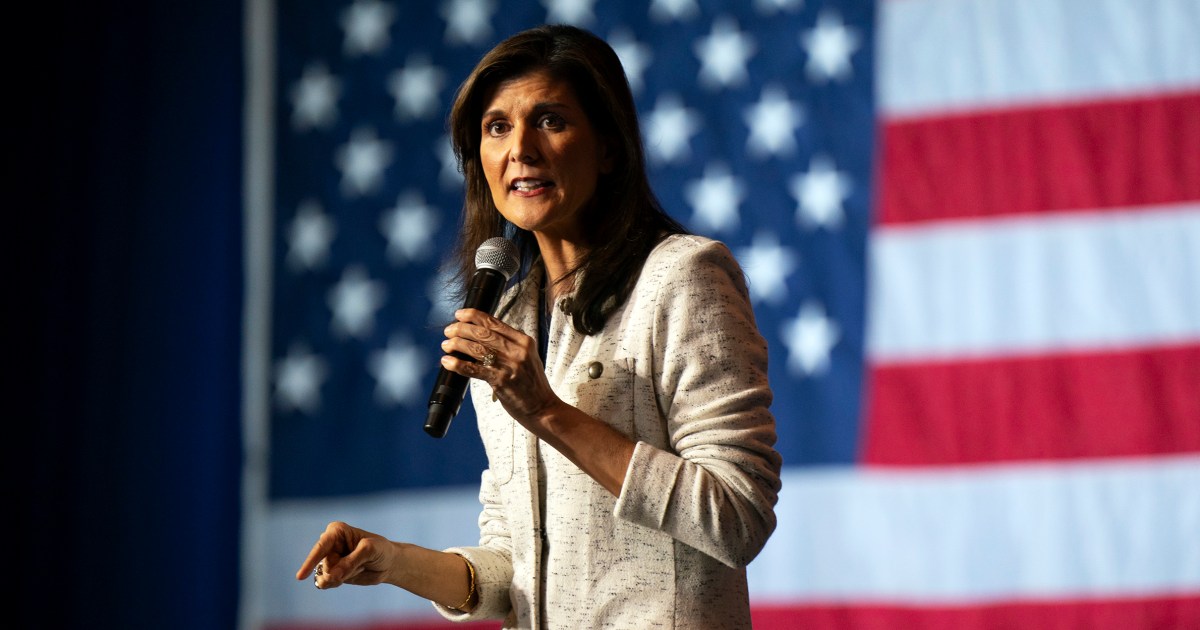
    Nikki Haley's super PAC spent big to fuel her rise. It started 2024 with little left. - NBC News

    little.indah.link The super PAC backing former U.N. Ambassador Nikki Haley entered the election year in January with just $3.5 million in...

    Popular Posts