Rechercher dans ce blog

Tuesday, March 30, 2021

Little Steps Pediatric Therapy Partners with the Ivy Rehab Network - PRNewswire

little.indah.link

"Little Steps has grown so much in the past year, and we're thrilled to take this next step in our practice's development by joining the Ivy Rehab Network," said Jaime Passaglia, Founder of Little Steps. "Our patients mean the world to us, and this partnership highlights our commitment to their quality and personalized care and allows us to reach more and more children every step of the way.  We're excited for the new opportunities that joining the Ivy Rehab Network will open up for our patients, the community, and our teammates."

Little Steps, comprised of six clinics in the greater Chicago metropolitan area, is focused on improving children's lives with compassionate, educational, and comprehensive care. In addition to pediatric physical, occupational, and speech therapy services, they also offer supplemental educational programs, such as enrichment pods, social skills camps, and preschool readiness programs, to help children hone specific skills.

"The values of Little Steps and Ivy are very much aligned, they are a great fit for our network of partners," said Jeremy VanDevender, Ivy's Chief Development Officer. "We are thrilled to have them as our first pediatric partner in the Chicagoland region, and we are looking forward to growing together as we provide our youngest patients with the highest caliber of pediatric care."

About Ivy Rehab
Founded in 2003, Ivy Rehab is a rapidly growing network of best-in-class outpatient physical, occupational, speech therapy, and ABA clinics located throughout the United States. The Ivy Rehab Network consists of multiple brands all dedicated to providing exceptional care and personalized treatment to get patients feeling better, faster. With the support of leading middle-market private equity firm Waud Capital Partners, Ivy Rehab will continue its strategic growth via the ongoing investment in new partners who embrace their mission, vision, and values as well as a culture of being "All About the People."

Contact Information:
Ivy Rehab Network
Jeremy VanDevender
[email protected]

SOURCE Ivy Rehab Network

Let's block ads! (Why?)

The Link Lonk


March 30, 2021 at 10:15PM
https://www.prnewswire.com/news-releases/little-steps-pediatric-therapy-partners-with-the-ivy-rehab-network-301258664.html

Little Steps Pediatric Therapy Partners with the Ivy Rehab Network - PRNewswire

https://news.google.com/search?q=little&hl=en-US&gl=US&ceid=US:en

'Compromise' WHO report resolves little on pandemic's origins, but details probe's next steps - Science Magazine

little.indah.link

In January, international members of a pandemic origins probe visited a Chinese laboratory that studies coronaviruses.

REUTERS/Thomas Peter

Science’s COVID-19 reporting is supported by the Heising-Simons Foundation.

Where SARS-CoV-2 came from before it began its 15-month rampage around the globe is the biggest pandemic puzzle of all. But an eagerly awaited report on the question released today may satisfy few readers, especially given unrealistic expectations about how quickly the source of the coronavirus could be pinpointed. Produced by an international team of scientists after a carefully negotiated visit to China, where COVID-19 was first recognized, the report concludes that the likeliest start of the pandemic was a bat coronavirus that infected another, unidentified animal and then moved on to humans.

That’s long been the favored hypothesis of many virologists, but the team convened by the World Health Organization (WHO) reports little fresh evidence to support it, and members acknowledge several other scenarios, including an accidental release from a lab, remain possible. The report does, however, lay out plenty of next steps. “We still don’t know where the virus came from, but there’s a clear plan to continue investigating,” says virologist Angela Rasmussen of Georgetown University, who was on the WHO team.

The report was jointly written by 17 international experts, selected by WHO and approved by China, and an equal number of Chinese scientists. The group had been working for months together leading up to the WHO experts’ visit in January, when they reviewed data compiled by Chinese colleagues, went to sites potentially related to the pandemic’s origin, and debated the probability of different scenarios.

The report’s most definitive conclusion is also its most controversial: that it is “extremely unlikely” SARS-CoV-2 leaked out of a Chinese laboratory that was already studying coronaviruses, the Wuhan Institute of Virology (WIV). There’s little evidence to back the lab-escape hypothesis, but some researchers have criticized the WHO team members for all but ruling out the possibility when they were not authorized to investigate it independently. The WHO experts only spent a few hours at WIV and the report’s discussion of the lab leak scenario is sparse.

That’s understandable, some researchers say. “Given all the constraints and complexities here, they have probably done what they could,” says Yanzhong Huang, a global health specialist at the Council on Foreign Relations in New York City.

Rasmussen agrees. “A team of scientists is not qualified to conduct a detailed audit of WIV’s records, or get access to institutional files, lab notebooks, databases, or freezer inventories,” she says. “Nor does the WHO have the authority to stroll into China and demand that they give them unfettered access to WIV, China CDC [Center for Disease Control and Prevention], or any other institution.”

Most of the report’s findings were previewed at a press conference last month and in many subsequent media interviews by WHO team members. Still, at more than 300 pages, it lays out the data that the joint team of international and Chinese experts reviewed, including studies of the Huanan Market in Wuhan with which some of the first COVID-19 cases had contact.

The report outlines four scenarios for how the pandemic could have started and assesses their likelihood:

  1. Transmission of SARS-CoV-2 from an animal reservoir like bats to another host in which the virus spread before infecting humans. The team calls that scenario “likely to very likely.”
  2. Direct spillover into people from an animal reservoir like bats—considered “possible to likely” by the team.
  3. Spillover via frozen meat from an infected animal, a route the team labeled as “possible.”
  4. A lab incident leading to the first infection—the one scenario deemed “extremely unlikely.”

China has forcefully refuted the lab hypothesis while pushing the possibility that the infection could have arrived from outside China on frozen food, and some members of the WHO international team point out that the report’s conclusions reflect what the international team and its Chinese counterparts could agree on. “This entire report is a compromise,” says Fabian Leendertz, a wildlife veterinarian at the Robert Koch Institute in Germany and part of the international team. “And in a compromise, you have to respect the other’s views.”

The report recommends a host of further studies, in particular, sampling for the virus in wildlife and in farmed animals to find a possible intermediate host. But searching for SARS-CoV-2’s original animal reservoir may be most promising, Leendertz says. “At this point, it may well have disappeared from any intermediate host, so sampling bats, in particular, is probably the most likely to yield results.”

More investigations into the earliest days of the pandemic are also needed, says Thea Kølsen Fischer, a virologist at the University of Copenhagen and part of the international team. It’s still unclear when people started to get sick. In published research, scientists have described three cases of respiratory illness in China from early December 2019 that were thought to be COVID-19.

But the Chinese contingent of the WHO probe told the international team members they no longer believed those patients had SARS-CoV-2. The first case was a 62-year-old man who developed symptoms on 1 December 2019. He appeared to respond to antibiotics but got sicker later in the month and Chinese scientists reported in a journal article in 2020 that he had “laboratory confirmed” COVID-19. Although he had no contact with the Huanan market, his wife, who was hospitalized on 26 December and tested positive for COVID-19, told investigators she did. This case and the other two were discussed at length, Fischer says, and need further study. “We did not reach 100% agreement to discard these cases.”

The Chinese team also reviewed more than 76,000 other potential early COVID-19 cases—people with fever and other symptoms of the disease—and found no clear SARS-CoV-2 infections. A study of blood samples from the Wuhan blood bank to look for early COVID-19 cases is another recommended next step—although some outsiders have expressed bewilderment this hasn’t yet been done more than 15 months into the pandemic.

From the beginning, scientists on and outside the WHO team have pushed back against the idea that a short mission would quickly pinpoint the pandemic’s origins. The politically charged environment surrounding the WHO probe hasn’t helped matters, Rasmussen notes.

The report is just a first step, Fischer adds. “It feels like I’m standing in front of this wall and I’m now holding this piece of string in my hands, but I don’t know how long that string is on the other side of the wall. Maybe it’s short, and this will be done in months or maybe it’s long and this will take years.”

Let's block ads! (Why?)

The Link Lonk


March 30, 2021 at 09:00PM
https://www.sciencemag.org/news/2021/03/compromise-who-report-resolves-little-pandemic-s-origins-details-probe-s-next-steps

'Compromise' WHO report resolves little on pandemic's origins, but details probe's next steps - Science Magazine

https://news.google.com/search?q=little&hl=en-US&gl=US&ceid=US:en

A little-known hedge fund caused widespread chaos on Wall Street - ABC17NEWS - ABC17News.com

little.indah.link

The names of the key players are different, but the lessons similar. The spectacular implosion of hedge fund Archegos Capital Management, much like the GameStop saga earlier this year, serves as a reminder of the dangers posed by extreme leverage, secret derivatives and rock-bottom interest rates.

ViacomCBS, Discovery and other media titans’ stocks crashed Friday as Wall Street banks that lent to Archegos forced the firm to unwind its bets. The epic firesale wiped out more than half of Viacom’s value last week alone.

Major banks face billions of dollars in losses from their exposure to Archegos. Both Credit Suisse and Nomura tumbled Monday after warning of significant hits to their earnings.

The most startling part about the tale of Archegos is that it is a firm that few people had ever heard of before this weekend. And yet in this era of easy money, Archegos was able to borrow so much that its failure created shockwaves large enough to ripple across Wall Street — and impact everyday Americans’ retirement accounts.

“It’s a wake-up call. With leverage, comes risk,” said Art Hogan, chief market strategist at National Securities Corporation. “This is the second time we’ve learned a lesson this year about leverage.”

In January, another hedge fund, Melvin Capital Management, nearly collapsed after its massive bets against GameStop were blown up by an army of traders on Reddit. Investors were surprised to learn about the sheer size of the short positions anticipating the video game retailer’s stock price would fall.

When GameStop shares instead went to the moon, Melvin Capital suffered staggering losses and was forced to reach a $2.8 billion bailout with larger rivals.

“We saw it on the short side when GameStop blew up. Now we are seeing it on the long side,” Hogan said.

Opaque financial instruments

Archegos Capital was using borrowed money — apparently a ton of it — to make outsized bets that propped up media stocks. This type excessive leverage is made possible by extremely low interest rates from the Federal Reserve.

The full scale of these bets wasn’t clear until now.

Perhaps in an effort to avoid making public disclosure filings, Archegos reportedly used derivatives known as total return swaps to mask some of its large investment positions. Investors using these swaps receive the total return of a stock from a dealer and those returns are typically amplified by leverage.

Archegos could not be reached for comment on Monday.

Typically, investors who own more than 5% of a stock are required to report that stake with the SEC. These filings do not appear to have been made this time.

“Anytime a derivative is involved, you don’t really know how deep the tentacles go,” said Joe Saluzzi, co-head of trading at Themis Trading.

The share sale that broke the camel’s back

This complex strategy backfired last week.

Seeking to capitalize on its skyrocketing stock price, ViacomCBS announced plans for a $3 billion share sale. Up until that point, ViacomCBS shares had nearly tripled on the year. But the share sale appeared to be too much for the market to handle and the media boom morphed into a rout.

Archegos faced margin calls from its Wall Street lenders. A margin call by a broker requires a client to add funds to its account if the value of an asset drops below a specified level. If the client can’t pay up — and in this case Archegos apparently couldn’t — the broker can step in and dump the shares on the client’s behalf.

Goldman Sachs, one of Archegos’ lenders, seized collateral and sold shares on Friday, a person familiar with the matter told CNN Business. This so-called forced liquidation set off a bloodbath Friday that drove down shares of ViacomCBS and Discovery more than 25% apiece.

Credit Suisse said that the default by a “significant US-based hedge fund” would cause a major hit to its earnings. A person familiar with the matter told CNN Business that Archegos was the firm causing the losses for Credit Suisse.

Nomura said its losses could be as much as $2 billion from “transactions with a US client.”

Founder of hedge fund involved in insider trading scandal

The episode demonstrates the intricate web linking firms across Wall Street — and the risks to the banks providing large amounts of leverage.

“Systemic risk from secret and interconnected leverage, trading and derivatives in astronomical undisclosed amounts continue to permeate the shadow banking system,” Better Markets CEO Dennis Kelleher said in a statement.

Hogan said investors must remember the inherent risks involved in the business lines of banks.

“They watch the creditworthiness of clients, but it’s not always perfect,” he said.

The creditworthiness of Archegos is a central question here. Bill Hwang, the firm’s founder and a protégé of hedge fund pioneer Julian Robertson, was previously enmeshed in an insider trading scandal at Tiger Asia Management, a hedge fund he founded.

In 2012, the SEC alleged Tiger Asia made nearly $17 million in illegal profits in a scheme involving Chinese bank stocks. Hwang pleaded guilty that year on behalf of Tiger Asia to one count of wire fraud. Tiger Asia was sentenced to one year of probation and ordered to forfeit more than $16 million.

In the wake of the insider trading scandal, Goldman Sachs stopped doing business with Hwang for a period of time, a person familiar with the matter told CNN Business. However, Goldman Sachs later resumed a relationship with Hwang, serving as one of his firm’s lenders.

Repeat of Long-Term Capital Management?

The blow-up of Archegos Capital brings back bad memories of Long-Term Capital Management. That massive hedge fund’s collapse in 1998 threatened the financial system, forcing the federal government to intervene.

“This is likely not Long-Term Capital,” Hogan said, citing reforms that mean banks hold less risk than before the 2008 crisis. “I don’t think this is the tip of the iceberg.”

Saluzzi, the Themis Trading executive, is not sure yet, pointing to how markets initially shrugged off the collapse of Bear Stearns hedge funds in the summer of 2007.

“We don’t know how far the tentacles go,” Saluzzi said. “Early in the Bear Stearns crisis, the market was fine — until it wasn’t.”

Let's block ads! (Why?)

The Link Lonk


March 30, 2021 at 05:42PM
https://abc17news.com/money/2021/03/30/a-little-known-hedge-fund-caused-widespread-chaos-on-wall-street/

A little-known hedge fund caused widespread chaos on Wall Street - ABC17NEWS - ABC17News.com

https://news.google.com/search?q=little&hl=en-US&gl=US&ceid=US:en

A little-known hedge fund caused widespread chaos on Wall Street - KTVZ

little.indah.link

The names of the key players are different, but the lessons similar. The spectacular implosion of hedge fund Archegos Capital Management, much like the GameStop saga earlier this year, serves as a reminder of the dangers posed by extreme leverage, secret derivatives and rock-bottom interest rates.

ViacomCBS, Discovery and other media titans’ stocks crashed Friday as Wall Street banks that lent to Archegos forced the firm to unwind its bets. The epic firesale wiped out more than half of Viacom’s value last week alone.

Major banks face billions of dollars in losses from their exposure to Archegos. Both Credit Suisse and Nomura tumbled Monday after warning of significant hits to their earnings.

The most startling part about the tale of Archegos is that it is a firm that few people had ever heard of before this weekend. And yet in this era of easy money, Archegos was able to borrow so much that its failure created shockwaves large enough to ripple across Wall Street — and impact everyday Americans’ retirement accounts.

“It’s a wake-up call. With leverage, comes risk,” said Art Hogan, chief market strategist at National Securities Corporation. “This is the second time we’ve learned a lesson this year about leverage.”

In January, another hedge fund, Melvin Capital Management, nearly collapsed after its massive bets against GameStop were blown up by an army of traders on Reddit. Investors were surprised to learn about the sheer size of the short positions anticipating the video game retailer’s stock price would fall.

When GameStop shares instead went to the moon, Melvin Capital suffered staggering losses and was forced to reach a $2.8 billion bailout with larger rivals.

“We saw it on the short side when GameStop blew up. Now we are seeing it on the long side,” Hogan said.

Opaque financial instruments

Archegos Capital was using borrowed money — apparently a ton of it — to make outsized bets that propped up media stocks. This type excessive leverage is made possible by extremely low interest rates from the Federal Reserve.

The full scale of these bets wasn’t clear until now.

Perhaps in an effort to avoid making public disclosure filings, Archegos reportedly used derivatives known as total return swaps to mask some of its large investment positions. Investors using these swaps receive the total return of a stock from a dealer and those returns are typically amplified by leverage.

Archegos could not be reached for comment on Monday.

Typically, investors who own more than 5% of a stock are required to report that stake with the SEC. These filings do not appear to have been made this time.

“Anytime a derivative is involved, you don’t really know how deep the tentacles go,” said Joe Saluzzi, co-head of trading at Themis Trading.

The share sale that broke the camel’s back

This complex strategy backfired last week.

Seeking to capitalize on its skyrocketing stock price, ViacomCBS announced plans for a $3 billion share sale. Up until that point, ViacomCBS shares had nearly tripled on the year. But the share sale appeared to be too much for the market to handle and the media boom morphed into a rout.

Archegos faced margin calls from its Wall Street lenders. A margin call by a broker requires a client to add funds to its account if the value of an asset drops below a specified level. If the client can’t pay up — and in this case Archegos apparently couldn’t — the broker can step in and dump the shares on the client’s behalf.

Goldman Sachs, one of Archegos’ lenders, seized collateral and sold shares on Friday, a person familiar with the matter told CNN Business. This so-called forced liquidation set off a bloodbath Friday that drove down shares of ViacomCBS and Discovery more than 25% apiece.

Credit Suisse said that the default by a “significant US-based hedge fund” would cause a major hit to its earnings. A person familiar with the matter told CNN Business that Archegos was the firm causing the losses for Credit Suisse.

Nomura said its losses could be as much as $2 billion from “transactions with a US client.”

Founder of hedge fund involved in insider trading scandal

The episode demonstrates the intricate web linking firms across Wall Street — and the risks to the banks providing large amounts of leverage.

“Systemic risk from secret and interconnected leverage, trading and derivatives in astronomical undisclosed amounts continue to permeate the shadow banking system,” Better Markets CEO Dennis Kelleher said in a statement.

Hogan said investors must remember the inherent risks involved in the business lines of banks.

“They watch the creditworthiness of clients, but it’s not always perfect,” he said.

The creditworthiness of Archegos is a central question here. Bill Hwang, the firm’s founder and a protégé of hedge fund pioneer Julian Robertson, was previously enmeshed in an insider trading scandal at Tiger Asia Management, a hedge fund he founded.

In 2012, the SEC alleged Tiger Asia made nearly $17 million in illegal profits in a scheme involving Chinese bank stocks. Hwang pleaded guilty that year on behalf of Tiger Asia to one count of wire fraud. Tiger Asia was sentenced to one year of probation and ordered to forfeit more than $16 million.

In the wake of the insider trading scandal, Goldman Sachs stopped doing business with Hwang for a period of time, a person familiar with the matter told CNN Business. However, Goldman Sachs later resumed a relationship with Hwang, serving as one of his firm’s lenders.

Repeat of Long-Term Capital Management?

The blow-up of Archegos Capital brings back bad memories of Long-Term Capital Management. That massive hedge fund’s collapse in 1998 threatened the financial system, forcing the federal government to intervene.

“This is likely not Long-Term Capital,” Hogan said, citing reforms that mean banks hold less risk than before the 2008 crisis. “I don’t think this is the tip of the iceberg.”

Saluzzi, the Themis Trading executive, is not sure yet, pointing to how markets initially shrugged off the collapse of Bear Stearns hedge funds in the summer of 2007.

“We don’t know how far the tentacles go,” Saluzzi said. “Early in the Bear Stearns crisis, the market was fine — until it wasn’t.”

Let's block ads! (Why?)

The Link Lonk


March 30, 2021 at 05:19PM
https://ktvz.com/money/2021/03/30/a-little-known-hedge-fund-caused-widespread-chaos-on-wall-street/

A little-known hedge fund caused widespread chaos on Wall Street - KTVZ

https://news.google.com/search?q=little&hl=en-US&gl=US&ceid=US:en

Monday, March 29, 2021

Police shooting: One killed in Little Village early Monday when an officer opened fire - Chicago Tribune

little.indah.link

Police began running after him, and there was a “confrontation in an alley” in the 2300 block of South Sawyer. Police later clarified the official address of the confrontation, saying that it happened in an alley in the 2300 block of South Spaulding. The alley behind Farragut Career Academy High School, 2359 S. Spaulding Ave., runs behind the odd-number side of Spaulding and the even-numbered side of Sawyer.

Let's block ads! (Why?)

The Link Lonk


March 30, 2021 at 01:43AM
https://www.chicagotribune.com/news/breaking/ct-person-fatally-shot-by-police-little-village-20210329-lfzat4tekzddrfbeqg7pc2sw4m-story.html

Police shooting: One killed in Little Village early Monday when an officer opened fire - Chicago Tribune

https://news.google.com/search?q=little&hl=en-US&gl=US&ceid=US:en

What we know: Two Iowa State crew club members dead after rowing accident on Little Wall Lake - Ames Tribune

Little Caesars Offers HOT-N-READY Thin Crust Pizza For $6.49 Nationwide - PRNewswire

little.indah.link

DETROIT, March 29, 2021 /PRNewswire/ -- Little Caesars®, the home of HOT-N-READY® pizza, is offering a nationwide pizza deal that will have you asking, "How does such a thin crust withstand the weight of all those toppings?" The Thin Crust Pepperoni Pizza is a large pizza that starts with a crispy, flaky, thin crust, topped with sauce made from fresh-packed, vine-ripened California crushed tomatoes, covered all the way to the edges with mozzarella and Muenster cheese, and loaded with a generous portion of pepperoni.

"This is thin crust pizza done Little Caesars style," said Jeff Klein, chief marketing officer for Little Caesars. "The abundant toppings go all the way to the edge, and every bite is an explosion of pizza taste. The crust may be thin, but the pizza is big on flavor and value."

Starting March 29 and for a limited time, the HOT-N-READY Thin Crust Pepperoni Pizza is available from 4:00-8:00 p.m. for only $6.49 plus applicable tax at participating locations.  Customers can also order ahead and pre-pay via the Little Caesars app, then conveniently collect the order using Pizza Portal® pickup – a heated, self-service mobile order pickup station. Prices may vary. Prices higher in AK, HI, and third-party online sites.

ABOUT LITTLE CAESARS®  

Headquartered in Detroit, Michigan, Little Caesars was founded by Mike and Marian Ilitch in 1959 as a single, family-owned restaurant. Today, Little Caesars is the third largest pizza chain in the world, with stores in each of the 50 U.S. states and 27 countries and territories. Little Caesars has contactless options for both delivery and carry-out through the Little Caesars app.  Pizzas are baked in 475-degree ovens to ensure food safety and never touched after baking. The chain has also reinforced cleanliness and sanitization procedures, increasing the frequency of cleaning commonly touched surfaces including door handles, glass, countertops, Pizza Portal surfaces, phones, and cash registers.

Known for its HOT-N-READY® pizza and famed Crazy Bread®, Little Caesars has been named "Best Value in America" for the past 14 years (based on nationwide survey of national quick service restaurant customers conducted by Sandelman & Associates - 2007-2020 entitled "Highest Rated Chain – Value for the Money"). Little Caesars products are made with quality ingredients, like fresh, never frozen, mozzarella and Muenster cheese and sauce made from fresh-packed, vine-ripened California crushed tomatoes.

An exceptionally high growth company with 60 years of experience in the $145 billion worldwide pizza industry, Little Caesars is continually looking for franchisee candidates to join our team in markets around the world. In addition to providing the opportunity for entrepreneurial independence in a franchise system, Little Caesars offers strong brand awareness with one of the most recognized and appealing characters in the country, Little Caesar.

SOURCE Little Caesars Pizza

Related Links

http://www.littlecaesars.com

Let's block ads! (Why?)

The Link Lonk


March 29, 2021 at 10:01PM
https://www.prnewswire.com/news-releases/little-caesars-offers-hot-n-ready-thin-crust-pizza-for-6-49-nationwide-301257619.html

Little Caesars Offers HOT-N-READY Thin Crust Pizza For $6.49 Nationwide - PRNewswire

https://news.google.com/search?q=little&hl=en-US&gl=US&ceid=US:en
Featured Post

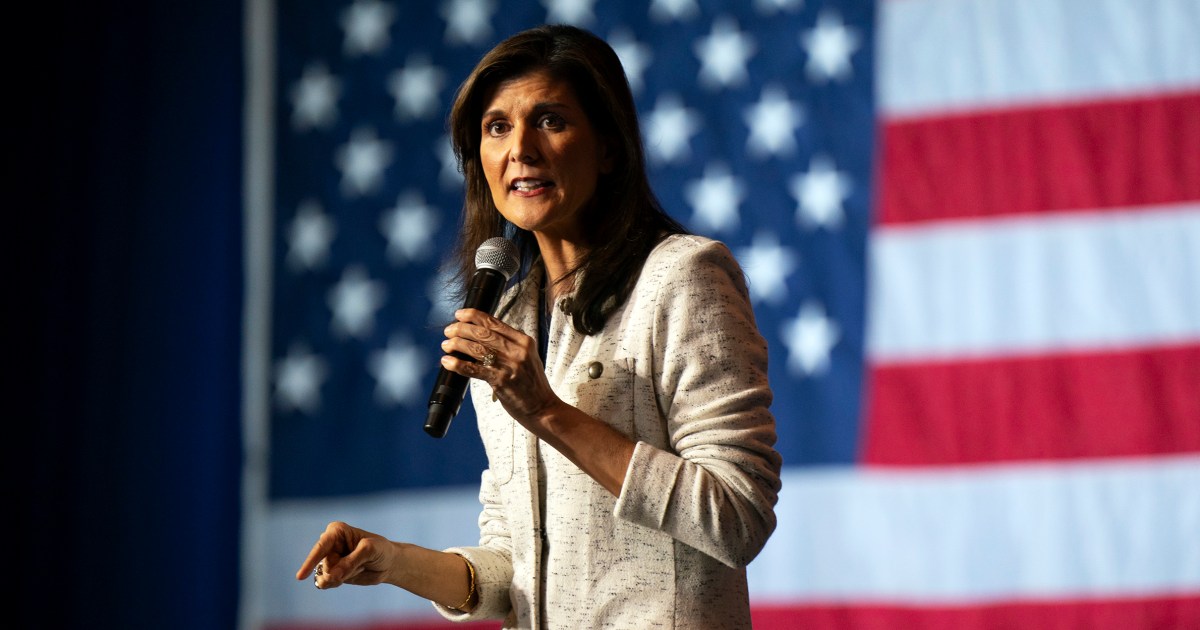
Nikki Haley's super PAC spent big to fuel her rise. It started 2024 with little left. - NBC News

little.indah.link The super PAC backing former U.N. Ambassador Nikki Haley entered the election year in January with just $3.5 million in...

Popular Posts