Huth told The Tennessean on Saturday that league president David Jones informed him of the news Friday.
In a GroupMe chat message Friday with the players and players' parents, Huth wrote that the reason he no longer would be the team's manager was "because multiple parents from the 2023 all star team called (Jones) and told him that I treated their kids unfairly, and they didn't feel like the team was as close as years in the past."
In his GroupMe message, Huth wrote that he was "shocked and incredibly sad" about the news.
Nolensville Little League finished second in the U.S. in 2022, falling one game shy of playing for the championship. The team lost its only two games in the 2021 Series.
Huth had managed Nolensville Little League's All-Stars since 2017. He nearly quit coaching in 2019, almost a year after his father died, but decided to return, he said, after Jones talked him into it.
Below is the message Huth sent to the group chat Friday, in its entirety:
"David Jones, the league president, just informed me that I cannot coach this year because multiple parents from the 2023 all star team called him and told him that I treated their kids unfairly, and they didn’t feel like the team was as close as years in the past. Frankly, I am shocked and incredibly sad. If you are one of those parents, all I can do is apologize that you feel that way. There are very few things in this world that I truly love, and one of those is Little League Baseball. To have that taken away rips my heart out."
Most messages left by The Tennessean for several parents of players on the team, as well as for Jones and another Nolensville Little League board member, were not returned.
One parent responded via text that they "aren't interested in being part of your story."
Most parents of players on the team were contacted by the Nolensville Little League board and asked for their opinions and input about Huth, another parent told The Tennessean.
Weaver's parents, Matt and Rachel Weaver, were not contacted by the board, Matt said.
Some parents felt Huth had a big ego and went out of his way to put a lot attention on himself.
"I think that was a fair criticism from the other parents, of, 'Hey, it ain't about you, Coach. It's about the kids,' " Matt Weaver said. "Should that have gotten him fired from this position? I think that's a bit extreme.
"He was a little prickly sometimes. But in my mind you don't achieve that level of success without being a little prickly. I think feelings were hurt. Expectations were exceptionally high. It was championship game or bust. We didn't make it."
Huth recently was awarded the Nashville Old Timers Baseball Association's 2024 Mr. Baseball award.
This is a developing story. Please check back for updates.
January 28, 2024 at 01:44AM
https://news.google.com/rss/articles/CBMigAFodHRwczovL3d3dy50ZW5uZXNzZWFuLmNvbS9zdG9yeS9zcG9ydHMvYmFzZWJhbGwvMjAyNC8wMS8yNy9yYW5keS1odXRoLW5vbGVuc3ZpbGxlLWxpdHRsZS1sZWFndWUtd29ybGQtc2VyaWVzLWNvYWNoLzcyMzc5OTQ4MDA3L9IBAA?oc=5
Randy Huth out as Nolensville coach after 3 straight Little League World Series appearances - Tennessean
When it comes to growing your wealth, sticking to some hard-and-fast rules can go a long way.
Michela Allocca would know. She's a former financial analyst who managed to accumulate a net worth of more than $500,000 by age 28, according to documents reviewed by CNBC Make It.
In 2022, she left her corporate job to pursue her side hustle as a personal finance consultant full-time. In a recent TikTok post with nearly a million views, the "Break Your Budget" author shared practical tips on how to grow your wealth, drawing from her own experience.
These are five common money habits she avoids.
1. Shopping sales
While most people think of sales as a way to save money, they can also be an excuse to splurge on things you normally wouldn't have purchased, Allocca says.
"Sales are designed to create FOMO," Allocca says on TikTok, referring to the fear of missing out. "They're designed to prompt you to purchase."
Buying something you don't need for 50% off is still spending money you weren't planning to spend in the first place, she says.
Allocca still buys things she needs when they're on sale, but she's mindful to avoid unnecessary spending on anything else.
2. Impulse spending
Nearly all American adults say they spend impulsively, with 64% saying they've regretted the impulse purchases they've made, according to a 2023 study.
Since it's so easy to make regrettable purchases, Allocca tries to avoid impulse shopping altogether. Instead, whenever she feels the urge to buy something, she adds the item to a list on her phone, which creates space between her and "an immediate urge and desire to buy something," she says.
As a rule, she recommends giving yourself four or five days to consider the purchase. At that point, "you're probably going to have forgotten about it," she says.
"We as a culture are very uncomfortable denying ourselves what we all like to call 'little treats,' but everything can't be a little treat," Allocca says.
3. Using traditional savings accounts
Allocca favors high-yield savings accounts over the traditional savings accounts typically offered by large banks, as they offer better annual interest rates.
Currently, you can find high-yield savings accounts offering APYs of around 5%, while traditional accounts offer interest rates closer to 0.6%, per Bankrate's most recent data. Many online banks and credit unions offer high-yield savings accounts, so they're not hard to come by.
"All of my cash savings are in a high-yield savings account," says Allocca. "If you aren't using a high-yield savings account, make 2024 the year you open one. There's no catch, and there's no downside — it's literally just a space for your cash to earn a little bit of extra interest."
4. Putting off investing
It can be easy to skip out on investing, especially in your 20s when retirement seems far off and you haven't set up any dedicated accounts yet.
"There were probably two years post-grad where I didn't invest really, because I was nervous, I was scared, I didn't feel like I knew what I was doing," says Allocca.
That said, "not knowing what you're doing when it comes to investing is no longer an excuse because there is so much information floating around," she says.
Allocca doesn't use a debit card. Instead, she makes almost all of her purchases with travel rewards credit cards.
By doing so, she collects rewards points that can be used to purchase things like flights or hotels. However, since credit cards charge high interest rates that can quickly lead to more debt, she pays off the balance on her cards every two weeks.
"I never buy anything that I can't pay off," she says.
Want to land your dream job in 2024? Take CNBC's new online course How to Ace Your Job Interview to learn what hiring managers are really looking for, body language techniques, what to say and not to say, and the best way to talk about pay. Get started today and save 50% with discount code EARLYBIRD.
January 27, 2024 at 09:00PM
https://news.google.com/rss/articles/CBMiaGh0dHBzOi8vd3d3LmNuYmMuY29tLzIwMjQvMDEvMjcvMjgteWVhci1vbGQtd2l0aC1hLTUwMGstbmV0LXdvcnRoLTUtdGhpbmdzLWktbmV2ZXItZG8td2l0aC1teS1tb25leS5odG1s0gFsaHR0cHM6Ly93d3cuY25iYy5jb20vYW1wLzIwMjQvMDEvMjcvMjgteWVhci1vbGQtd2l0aC1hLTUwMGstbmV0LXdvcnRoLTUtdGhpbmdzLWktbmV2ZXItZG8td2l0aC1teS1tb25leS5odG1s?oc=5
28-year-old with a net worth over $500,000 shares 5 money habits she avoids: 'Everything can't be a little treat' - CNBC
A ruling on Friday by the International Court of Justice on charges of genocide against Israel had deep historical resonance for both Israelis and Palestinians. But it lacked immediate practical consequences.
The World Court did not order a halt to fighting in the Gaza Strip and made no attempt to rule on the merits of the case brought by South Africa, a process that will take months — if not years — to complete.
But the court did order Israel to comply with the Genocide Convention, to send more aid to Gaza and to inform the court of its efforts to do so — interim measures that felt like a rebuke to many Israelis and a moral victory to many Palestinians.
For many Israelis, the fact that a state founded in the aftermath of the Holocaust had been accused of genocide was “one hell of a symbol,” Alon Pinkas, an Israeli political commentator and former ambassador, said after the ruling by the court in The Hague.
“That we’re even mentioned in the same sentence as the concept of genocide — not even atrocity, not disproportionate force, not war crime, but genocide — that is extremely uncomfortable,” he added.
For many Palestinians, the court’s intervention offered a brief sense of validation for their cause. Israel is rarely held to account for its actions, Palestinians and their supporters say, and the ruling felt like a welcome exception amid one of the deadliest wars this century.
Thank you for your patience while we verify access. If you are in Reader mode please exit and log into your Times account, or subscribe for all of The Times.
Thank you for your patience while we verify access.
January 27, 2024 at 03:56AM
https://news.google.com/rss/articles/CBMiWGh0dHBzOi8vd3d3Lm55dGltZXMuY29tLzIwMjQvMDEvMjYvd29ybGQvbWlkZGxlZWFzdC9pY2otZ2Vub2NpZGUtcnVsaW5nLWlzcmFlbC1nYXphLmh0bWzSAQA?oc=5
ICJ’s Genocide Ruling Against Israel Has Little Immediate Effect - The New York Times
Once the island's only inhabitants, Indigenous Taiwanese now make up just 2.38% of Taiwan's population – and their vibrant festivals play a crucial part in preserving their culture.
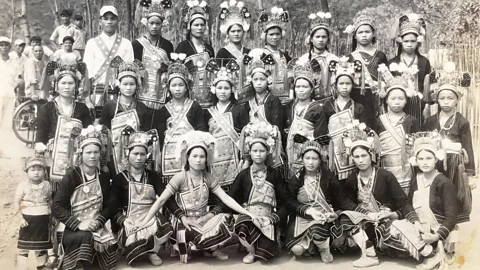
Around 50 people holding hands in a line entered the small square in east Taiwan. At the head stood the chief dressed in a long red coat and a domed red hat. Beside him were eight older men in red-tasselled jackets followed by younger men in vibrant skirts and high-feathered headdresses. Next came the women who wore luminous plastic beads around their necks.
The line curled into a circle that slowly moved around the square as the dancers swung their connected hands and stamped one foot forward, then stepped back before thrusting the other foot out. The man next to the chief sang a short, powerful chant, with the line of performers responding in turn to each phrase. The combined effect was a hypnotic rhythm of repeated song and movement punctuated with yells or shrieks that continued for almost an hour. As I stood watching, I became increasingly transfixed.
I was at the Posko tribe's harvest festival celebration ("Ilisin" in Pangcah, the local language), which takes place every August in the town of Yuli in Taiwan's Hualien Province. The Posko are one of the many tribes of the Amis people, or Pangcah, as they like to be known – meaning "people" or "kinsmen". The Amis/Pangcah are the largest of Taiwan's Indigenous groups and mostly live in the counties east of Taiwan's central mountains: Hualien and Taitung and the Hengchun Peninsula.
Taiwan's Indigenous people – as opposed to the majority Chinese Han population – belong to the Austronesian group of peoples. Though they originated in Taiwan, many migrated to South East Asia, Micronesia and Polynesia from 1500 to 1000 BCE as a result of population growth. The Austronesians were great seafarers and developed sailing and navigation technologies that allowed them to travel long distances – Austronesian-speaking people today are the world's fifth-biggest language group with an estimated 400 million people.
James Rogerson
The harvest festival celebrations play a vital role in preserving Indigenous culture (Credit: James Rogerson)
Today, however, Indigenous Taiwanese make up just 2.38% of the island's 23 million people. Of these, the Amis/Pangcah number roughly 200,000 and comprise 37.1% of the Indigenous population.
It is thought that Indigenous peoples (formerly known as Taiwanese aborigines) have inhabited Taiwan for more than 6,000 years; in fact, before 1620, there were only Indigenous peoples on the island. However, a succession of colonial powers invaded and ruled over the following four centuries: the Dutch and Spanish (1624-1668), the mainland Chinese Qing Dynasty (1683-1895), the Japanese (1895-1945) and finally The Republic of China (1945-1987).
During the 20th Century, Indigenous language and culture were eroded by policies of assimilation undertaken first by the Japanese and then by the KMT party who, under its leader Chiang Kai-Shek, governed Taiwan from 1949 to 1987, having moved The Republic of China to Taiwan in 1949 after being ousted from mainland China by Mao Zedong. Following Chiang's death in 1975, Taiwan began a transition to democracy and held its first elections in 1996, although China sees Taiwan as a breakaway province that will eventually be unified with the mainland.
School education prohibited the use of Indigenous languages and excluded traditional knowledge and culture from the curriculum
Tibusungu 'e Vayayana, director of the Centre for Indigenous Research and Development at National Taiwan Normal University, explained the impact of KMT rule on the Indigenous population: "School education prohibited the use of Indigenous languages and excluded traditional knowledge and culture from the curriculum… leading to rapid language and cultural loss as well as confusion and even loss of cultural identity."
Jasmine Wallace
During the 20th Century, Indigenous language and culture were eroded by policies of assimilation (Credit: Jasmine Wallace)
For many Indigenous adults back then, it would have been a source of shame or embarrassment to use their traditional language in public. Likewise, for most of the 20th Century, they were referred to by the insulting term of "fan", meaning "barbarian", and it only became legal for people to use their Indigenous names on their identity cards in 1995. In fact, most Indigenous people today still use Chinese names.
More Indigenous festivals
In the Bunun tribe's Ear Shooting Festival each April and May, traditionally young men would hunt boar and deer in the mountains returning with an ear of their kill to be used as target practice by young, aspiring hunters. One of the larger celebrations is held in the village of Yongkang in the Yanping District in early May. The ceremony is open to outsiders and is said to be easy to find because the Bunun's songs can be heard from several kilometres away.
At the Flying Fish Festival, the Yami or Tao people celebrate the arrival of flying fish to Orchid Island off Taiwan's south eastern coast between January and June. Tourists are allowed to take part as long as they avoid certain taboos, including not catching and eating flying fish unless they appear on or above the water's surface, and not fishing with spear nets or drift nets. Anyone who breaks these rules is said to be cursed.
Thankfully, the harvest festival and other traditional rituals survived the cultural assimilation of the 20th Century, and the Ilisin are crucial in preserving the Pangcah's culture, as are other Indigenous ceremonies and weddings and funerals where traditional songs, dance and dress are still observed.
Earlier that day, I'd been invited by two sisters, Jasmine and Jennifer Tu, who live in Yuli and are from the Silangkong – another Pangcah tribe – to a banquet in the square that preceded the singing and dancing. There were dishes of spareribs and rattan stem (a palm grown in the hills above Yuli), steamed sea bass, and stir-fried wild boar and arrowhead bamboo. Bags of locally produced steamed glutinous rice were brought over to us. Glutinous rice plays an important part in Pangcah celebrations, including weddings and funerals, where it is used to make a sticky rice cake called "toron" that is a speciality of this region. The harvest festival is timed to celebrate the end of the rice harvest in July.
Jasmine and Jennifer explained the importance of the singing and chanting. Normally led by the chief or one of the elders, the chant is then echoed by the rest of the tribe. The main purpose is to show their gratitude to the spirits of their ancestors for protecting the community and praying for a good harvest the following year. The repeating of the chant demonstrates the tribe's respect for their elders and to emphasise the bond between tribal members. Each tribe has its own songs, and they are passed orally from generation to generation, sharing the stories of important figures and events from their past.
James Rogerson
The Amis/Pangcah are renowned for their chanting, with Enigma using an Amis chant on their single Return to Innocence (Credit: James Rogerson)
There is certainly something powerful and haunting about the Pangcah's singing. Many people might have heard it before: the German ambient pop group, Enigma, used a sample of an Amis chant on their 1994 single Return to Innocence, which then became an international hit and was used in a TV advert for the 1996 Olympics.
"It feels like a big family coming together," said Chen Yi, who was one of performers in the line, of the chanting. "It is about reminiscing about our ancestors and strengthening the will of tribal unity."
As the performance became more frenetic, people joined in the circular dance, including Jasmine and Jennifer, with their own colourful beads and bags. I was also pulled into the throng, everyone stomping their feet and swinging their arms as the chanting echoed around the square. I was struck by an intense feeling of euphoria as I was carried along in this collective moment of celebration.
I'd noticed that everyone in the original line was wearing a tasselled red satchel across their chests, and Jasmine later explained that it was known as a "lover's bag" and that "during the celebrations, girls or boys can put the bag on someone they like". The bags would often contain betel nuts as a gift, since Indigenous people chew them for their stimulant properties.
Traditionally it would be the girls who normally took the initiative of placing the bags – and this is how many couples would have got together in the past – but "it doesn't happen much now", Jasmine said.
James Rogerson
The performers wear tasselled red "lover's bags" as one of their traditions (Credit: James Rogerson)
Until the 20th Century, Pangcah society was a matriarchal one. Property was passed down through the female line and married couples would live with the wife's family. "For the husband it was an opportunity to improve the living conditions of his wife's family and was considered an honour," Jasmine said. However, the influence of Japanese and Han governance, where patriarchal family structures became the norm, changed this.
It is difficult to know what else of Pangcah culture has been lost because the Pangcah people have no written records of their history. Traditionally culture and traditions were passed from generation to generation through word of mouth. Sadly, few people still speak much of their original language and in many aspects of their lives – from language to food to education – Indigenous people have been assimilated into Taiwanese culture.
These celebrations are especially important to tribal people as our cultural identity and values are now weak
For Jasmine, this makes the festival all the more significant. "These celebrations are especially important to tribal people as our cultural identity and values are now weak," she said.
Sifo Lakaw, chairman of the Association of Pangcah Language Revitalization in Taiwan and an expert on Pangcah traditions, agrees. "The Ilisin is one of the only activities within the tribe where everyone is involved in the festival and its organisation," he later told me. "It is important because it encourages each household to appreciate each other and brings the community together."
James Rogerson
Many communities in Hualien province are still predominantly made up of Amis/Pangcah people (Credit: James Rogerson)
However, despite the damage caused to Taiwan's Indigenous culture, there are reasons to be optimistic for the future. Since the 1990s, Taiwan has been striving to be more inclusive. Legislation has been brought in to protect Indigenous rights, such as the Basic Law for Indigenous Peoples, which was enacted in 2005 and has led to what Vayayana described as "a greater judicial respect for Indigenous traditional customs, religion and land rights". More recently, in 2017, the Indigenous Language Development Act was passed allowing children to learn Amis in school.
Chen is hopeful about the future of the Posko: "Our ethnic ideology, culture, language, history and stories and clothing – these are all things that will be tested in the future, and we must focus on how to preserve and pass these on to the next generation," she said.
In the square, the festival was drawing to a close. A group of young men and women walked slowly from house to house singing a chant and banging big staffs made of bamboo on the ground. They were announcing that another annual festival had ended and were offering up prayers to the ancestors. As I watched, they marched slowly out of the square, the silhouettes of their headdresses distinct under the glow of the streetlights and songs echoing behind them, before disappearing into the dark.
---
Join more than three million BBC Travel fans by liking us on Facebook, or follow us on Twitterand Instagram.
If you liked this story, sign up for The Essential List newsletter– a handpicked selection of features, videos and can't-miss news delivered to your inbox every Friday.
January 26, 2024 at 08:00PM
https://news.google.com/rss/articles/CBMibmh0dHBzOi8vd3d3LmJiYy5jb20vdHJhdmVsL2FydGljbGUvMjAyNDAxMjUtYS12aWJyYW50LWNlbGVicmF0aW9uLW9mLXRhaXdhbnMtbGl0dGxlLWtub3duLW9yaWdpbmFsLWluaGFiaXRhbnRz0gEA?oc=5
A vibrant celebration of Taiwan's little-known original inhabitants - BBC.com
January 26, 2024 at 10:45PM
https://news.google.com/rss/articles/CBMiOmh0dHBzOi8vd3d3LnNjaWVuY2Uub3JnL2NvbnRlbnQvYmxvZy1wb3N0L2xpdHRsZS1rbm93bGVkZ2XSAQA?oc=5
An illustration of NASA's Ingenuity helicopter flying on Mars. In April 2021, Ingenuity became the first aircraft to complete a powered, controlled flight on another planet. NASA/JPL-Caltech
NASA/JPL-Caltech
NASA is retiring Ingenuity, its mini Mars helicopter, a week after it was damaged during its 72nd flight. The spindly overachiever made history as the first aircraft to complete a powered, controlled flight on another planet.
"The little helicopter that could — and it kept saying 'I think I can, I think I can' — well, it's taken its last flight," NASA Administrator Bill Nelson said in a video announcement on Thursday.
At least one of Ingenuity's carbon-fiber rotor blades was damaged when the helicopter was coming down for landing during a test flight on Jan. 18, Nelson said. Around that time, NASA also lost contact with Ingenuity. Communications were restored the next day, and the cause of the blackout is still under investigation, according to the space agency. The agency is also investigating the possibility that the damage was caused by a blade striking the ground. Its carbon-fiber rotor blades have enabled Ingenuity to fly through the extremely thin and cold Martian atmosphere.
But that 40-foot-high trip last week ended up being the helicopter's last.
Since it arrived on the planet almost three years ago, Ingenuity has surpassed expectations.
"It flew farther and higher than we ever thought possible," Nelson said. "What started as a technology demonstration with plans for only up to five flights has now completed a remarkable 72 flights on Mars."
Ingenuity landed on Mars in February 2021. Its biggest accomplishment — a 21st century "Wright Brothers moment" for extraterrestrial flight, as NASA calls it — came two months later when, on April 19, 2021, the 4-pound rotorcraft (1.5 pounds on Mars) made the first powered, controlled flight on Mars.
Its work didn't stop there. Ingenuity has been an aerial scout for the Mars rover Perseverance, conducting reconnaissance for scientists to pave the way for safer human and drone exploration on Mars and other planets.
January 26, 2024 at 07:23AM
https://news.google.com/rss/articles/CBMiXGh0dHBzOi8vd3d3Lm5wci5vcmcvMjAyNC8wMS8yNS8xMjI2OTgzMTU5L25hc2EtaW5nZW51aXR5LWhlbGljb3B0ZXItbWFycy1sYXN0LW1pc3Npb24tZGFtYWdl0gEA?oc=5
NASA's Ingenuity mission on Mars comes to an end - NPR
With this year’s festival entering its dying days, market news remains unusually slight, a surprise given how strike-impacted buyers were reportedly foaming for schedule-fillers. Big sales so far haven’t been all that big – Jesse Eisenberg comedy A Real Pain at Searchlight, Steven Soderbergh ghost story Presence at Neon – and so there are questions that still need answering going into the last weekend.
But earlier this week, as others umm-ed and ahh-ed, Netflix made a bullish statement with a $17m purchase of low-budget mind-bender It’s What’s Inside, an unusually high number for a genre film without any stars attached. While it may well be trumped over the next week or so given how other, more commercial titles remain unsold, it’s currently stamped with this year’s biggest-of-fest tag. That comes with a mostly terrible, tortured history, huge expectation leading to little reward, festival fever cured by lower altitude. Because for every Coda, there’s a Hamlet 2 or a Late Night or a Happy, Texas or a Birth of a Nation. The domination of streamers (forking out the most in recent years for films like Fair Play, Flora and Son, and Palm Springs) might have moved the goalposts for what success really means right now but buzz remains easier to measure and a talked-about hit in the mountains is too often a miss on the ground.
An easy guess with this one would be franchise potential, the kind of nifty conceit that could run on and on and Netflix has shown itself to be a streamer as obsessed with sequels as any studio. The details of the conceit are to be kept under wraps for now (whether Netflix can maintain such secrecy once a marketing campaign kicks into gear is to be seen) but it’s all about a suitcase. It’s brought to a remote country mansion by an estranged friend making a surprise appearance at a pre-wedding party, tensions packed in tight alongside. It contains a game he insists that they play, something they’ll never have seen before and something they must remain quiet about outside of the house. Chaos, and hysteria, follow.
What’s inside It’s What’s Inside is a bit of Talk to Me, a bit of Bodies Bodies Bodies, a bit of Ready or Not, a bit of Agatha Christie and a lot of attention-seeking trickery. The all-consuming maximalism of it – from intrusive score to obnoxious needle-drops to gimmicky cutaways to some top-of-the-lungs yelling – is dialled up so exhaustingly high that it’s hard to see a great number of Netflix viewers not clicking away during the opening, grating 20 minutes. The house itself – the product of a dated cliche: the brash, untalented pop artist – is exaggerated to the point of parody and the film is consistently hampered by a lack of atmosphere, something absolutely vital in a mysterious Christie setup. Greg Jardin’s obsession with garishly unreal multi-coloured mood lighting is a misfiring flourish and it all looks even shoddier when compared to the festival’s more beloved genre breakout I Saw the TV Glow, a film that uses an abundance of colour so gorgeously, it’s impossible to forget. The only thing evoked here is a plasticky film set.
It’s not just TV-trained first-timer Jardin’s film-making but his writing too, most characters drawn as lazy, one sentence cartoons – the vapid influencer, the sage-burning hippie, the white guy with a blaccent, etc. The jabs at social media are particularly clumsy, as if the script was written years ago and just recently dusted off, no changes made, and so while it all might have the bravado, and prodding insistence, that it is a “film of the moment”, it’s often strikingly uncool. Jardin demands a lot from his no-name cast, including The White Lotus’s Brittany O’Grady, and while they don’t all succeed – it’s a challenging acting exercise that many would fail – it’s at least a committed showcase.
When the artless swagger is tempered and Jardin allows the goofiness of his premise to fully take over, there are some fun, twisty stretches especially as the game gets deeper and nastier. Characters gaming out how to come out on top leads to some neat reversals but it also gets to be maddeningly convoluted, a slicker hand needed during a last act of fatiguing back and forths. We’re also being led towards something a little more ground-shifting than where we actually end up, a shoulder-shrug of a reveal that should have been a jaw-drop.
There’s a cracking elevator pitch of an idea here (one wonders if inevitable sequels will be able to squeeze more juice from it) but Jardin’s cocky, in-your-face excess coupled with his lack of follow-through makes this an unwinnable game.
It’s What’s Inside is showing at the Sundance film festival and will be released on Netflix later this year
January 26, 2024 at 03:26AM
https://news.google.com/rss/articles/CBMiUmh0dHBzOi8vd3d3LnRoZWd1YXJkaWFuLmNvbS9maWxtLzIwMjQvamFuLzI1L2l0cy13aGF0cy1pbnNpZGUtbW92aWUtcmV2aWV3LW5ldGZsaXjSAVJodHRwczovL2FtcC50aGVndWFyZGlhbi5jb20vZmlsbS8yMDI0L2phbi8yNS9pdHMtd2hhdHMtaW5zaWRlLW1vdmllLXJldmlldy1uZXRmbGl4?oc=5
It’s What’s Inside review – buzzy, big-sale Sundance thriller is a little empty - The Guardian